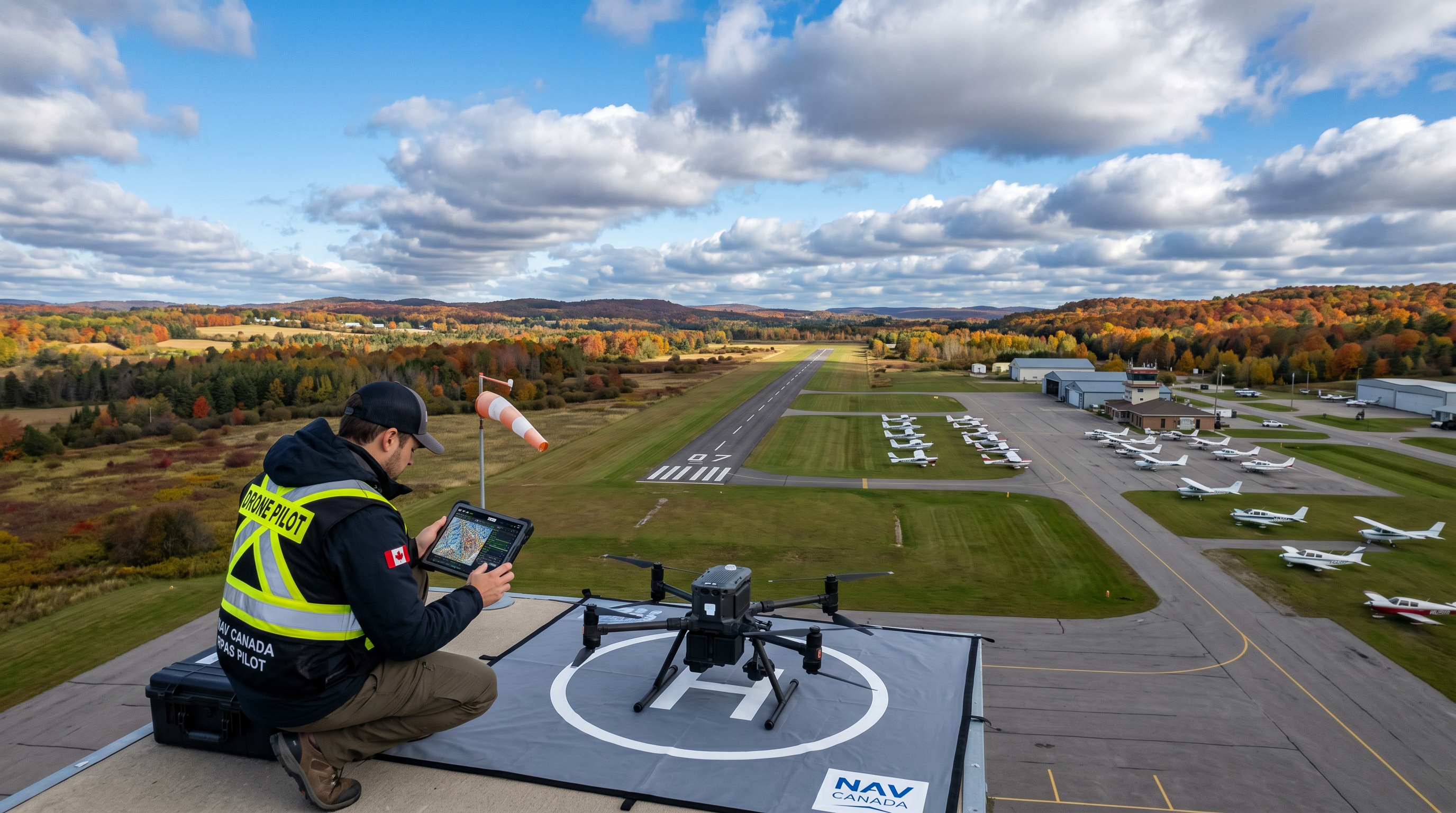
If you want to fly drones in controlled airspace, within 30 metres of bystanders, or close to airports, the advanced rpas certificate canada requirements are what stand between you and legal commercial work. Transport Canada created the Advanced operations category in 2019 to separate hobby pilots from commercial operators who need to share airspace with crewed aircraft. This guide walks you through every requirement, from the 50-question online exam to the in-person flight review, so you know exactly what to study and what to expect on test day.
What the Advanced RPAS Certificate Actually Is
The Advanced Pilot Certificate is a Transport Canada credential that lets you operate a remotely piloted aircraft system (RPAS) weighing 250 grams to 25 kilograms under Advanced operations rules. Advanced operations include flying in controlled airspace, flying within 30 metres of bystanders without their consent, and operating near aerodromes when you have the proper coordination in place. Without the certificate, you are limited to Basic operations, which keeps you in uncontrolled airspace and well away from people.
The certificate is regulated under Part IX of the Canadian Aviation Regulations. Transport Canada issues and tracks every certificate through their Drone Management Portal. Once you pass, the certificate is valid as long as you stay current with your recency requirements, which means completing one of five recurrent activities every 24 months.
Who Needs the Advanced RPAS Certificate
If your work involves any of the following, you need the Advanced certificate:
- Flying in Class C, D, E, or F controlled airspace
- Operating within 30 metres of people who are not part of your crew
- Flying at airports or heliports listed in the Canada Flight Supplement
- Conducting commercial inspections in built-up urban areas
- Real estate aerial photography in residential neighbourhoods
- Construction site monitoring near active worksites
- Public safety operations alongside fire, police, or emergency services
Recreational pilots flying in farm fields or empty parks usually only need Basic. But the moment you charge a client, fly near houses, or accept work in a city, you cross into Advanced territory. Anyone offering commercial drone services in urban Canada or near controlled airspace must hold this certificate. Clients ask for proof, and most insurance providers will not underwrite paid operations without it.
Advanced RPAS Certificate Canada Requirements at a Glance
The Advanced certificate has three core pillars: age, knowledge, and skill. Here is the full list:
- Age: minimum 16 years old. Pilots under 16 cannot hold the Advanced certificate.
- Knowledge exam: pass the Small Advanced Exam (50 questions, 60 minute time limit, 80% pass mark) through Transport Canada’s online portal.
- Flight Review: pass an in-person flight review with a Transport Canada designated Flight Reviewer at an approved RPAS Flight Review site.
- Drone registration: the drone you fly must be registered with Transport Canada (any RPAS 250 grams or heavier).
- Drone declaration: for some advanced operations, the manufacturer must have declared the drone meets specific safety standards for the type of operation.
The advanced rpas certificate canada requirements are stricter than Basic because the operations carry higher risk. Advanced pilots share airspace with crewed aircraft, fly near people, and work in environments where a crash could cause serious harm. Transport Canada wants to know you understand the regulations, the airspace, and the safety procedures before they hand you the credential.
The Online Exam Component of Advanced RPAS Certificate Canada Requirements
The Small Advanced Exam is the first hurdle. It covers nine subject areas:
- Air law and the Canadian Aviation Regulations Part IX
- Airspace classification and structure
- Meteorology and weather decision making
- Navigation including charts and Notice to Air Missions (NOTAMs)
- Radio communication procedures
- Flight operations and emergency procedures
- Theory of flight and aerodynamics
- Human factors and risk management
- Site survey procedures
You take the exam online through the Transport Canada Drone Management Portal. The cost is $25 CAD and you have 60 minutes to answer 50 multiple-choice questions. You need 80% correct to pass. If you fail, you wait 24 hours before retrying. Most candidates need two or three attempts if they self-study without structured ground school.
The exam draws from the same knowledge base used for crewed aviation private pilot exams in some areas, particularly airspace and meteorology. If you have never read a Visual Flight Rules chart or interpreted a METAR weather report, the exam will feel unfamiliar. SkyTech’s ground school spends two full days on these topics because they are where self-taught pilots score lowest.
The Flight Review Component of Advanced RPAS Certificate Canada Requirements
Passing the online exam alone does not give you the Advanced certificate. You must also pass an in-person Flight Review with a Transport Canada certified Flight Reviewer. The Flight Review is a practical assessment of your knowledge, planning, and flying skills. It typically takes two to three hours and is broken into three parts.
Pre-flight oral assessment. The Reviewer asks you about site survey procedures, airspace classification, weather minimums, emergency procedures, and your aircraft systems. Expect 30 to 60 minutes of structured questioning. The Reviewer is checking that you can apply knowledge from the written exam to a real flight scenario.
Site survey and flight planning. You walk the Reviewer through a site survey for the test location. You identify hazards, classify the airspace, check NOTAMs and current weather, and present a flight plan. This is where many candidates lose marks because they treat it as a checkbox exercise rather than a genuine safety analysis.
Flight portion. You demonstrate basic and advanced manoeuvres including normal takeoff and landing, hovering at different altitudes, emergency procedures, and a simulated lost link scenario. The Reviewer also tests your ability to maintain visual line of sight and react to changing conditions.
The cost of a Flight Review through a private provider in Ontario runs between $300 and $500. SkyTech’s certified Flight Reviewers conduct reviews at our Toronto training site and at client locations across Ontario. If you fail, you can retake the review after additional study or training.
How to Prepare for Advanced RPAS Certificate Canada Requirements
Preparation makes the difference between passing on the first attempt and grinding through multiple retries. Here is what works.
Take a structured ground school. A good two-day ground school covers every topic on the exam with real examples and practice questions. Self-study is possible but you need 40 to 60 hours of focused reading, and most candidates underestimate the airspace and meteorology sections. Our advanced RPAS certification course at SkyTech combines classroom theory with practice exams and one-on-one help on the topics you find hardest.
Read the official Transport Canada study guide. The Knowledge Requirements for Pilots of Remotely Piloted Aircraft Systems document is published free on the Transport Canada website. Read it from cover to cover at least once. Highlight anything that does not make sense and bring those questions to your ground school instructor.
Learn to read a VFR Navigation Chart. Download the VNC for your area from NavCanada. Practice identifying airspace boundaries, aerodromes, control zones, and obstacles. Several exam questions test chart reading directly, and chart reading is also part of the oral portion of the Flight Review.
Fly the aircraft you will use for the Flight Review. Many candidates show up for the Flight Review having flown only a few hours on the drone they bring. The Reviewer wants to see proficient, confident control. Practice for at least 10 hours on the specific aircraft, including emergency procedures and manual flight without GPS assistance.
Do a mock Flight Review. SkyTech offers mock reviews where one of our certified Flight Reviewers walks you through the exact format of the test, scores you against the Transport Canada rubric, and gives feedback on weak areas. Candidates who do a mock review pass the real review at much higher rates than candidates who walk in cold.
Common Mistakes That Cost People the Certificate
After running hundreds of candidates through our training programs, we see the same mistakes appear over and over:
- Treating site surveys as paperwork. The Reviewer wants to see you genuinely assess hazards. Memorizing a template does not work.
- Weak chart reading. Candidates who cannot identify a Class C airspace boundary on a VNC will struggle with the oral assessment.
- Overconfidence on the flight portion. Even experienced hobby pilots get tripped up by manual flight without GPS, since most consumer drones make it too easy to fly well.
- Misunderstanding weight categories. A drone over 25 kilograms requires a Special Flight Operations Certificate, not the standard Advanced certificate.
- Forgetting recency requirements. Even after you pass, you need to complete one of five recurrent activities every 24 months or your certificate becomes invalid.
What Comes After the Advanced Certificate
The Advanced certificate opens up most commercial work, but some operations still need additional approvals:
- Beyond Visual Line of Sight (BVLOS): requires a Special Flight Operations Certificate.
- Operations at night: permitted under Advanced if your drone is equipped with required position lighting.
- Flight over assembly of people: requires a Level 1 Compliant drone with specific manufacturer declarations.
- Operations above 400 feet AGL: requires SFOC and coordination with NAV CANADA.
- Drones over 25 kilograms: requires SFOC regardless of certificate level.
Most commercial pilots in Canada operate comfortably within Advanced operations. The certificate covers construction site mapping, real estate aerials in dense neighbourhoods, infrastructure inspections, public safety support, and agricultural surveys. As your work expands into specialized operations, you add SFOCs as needed.
Final Thoughts on the Advanced RPAS Certificate Canada Requirements
Earning the Advanced certificate is the most important professional step a Canadian drone pilot can take. The advanced rpas certificate canada requirements exist because Advanced operations carry real risk to people, property, and crewed aircraft. Take the preparation seriously, invest in proper training, and treat the Flight Review as a chance to prove your skill rather than a formality to push through. Once you hold the certificate, your career opens up across construction, energy, real estate, public safety, and surveying work in every province.
SkyTech runs in-person ground school in Toronto and serves candidates from across Ontario and beyond. Our certified Flight Reviewers can administer the test at our facility or at your work site. If you want to talk through your training path or ask questions about meeting the advanced rpas certificate canada requirements on your timeline, book a free consultation and we will map out exactly what you need to do next.
Ready to Take the Next Step?
Whether you need drone pilot certification, a custom engineered solution, help navigating Transport Canada permits, or a professional drone service for your next project, Mostavio-SkyTech is your trusted partner in Canada.
Contact us today for a free consultation and let’s build something great together.