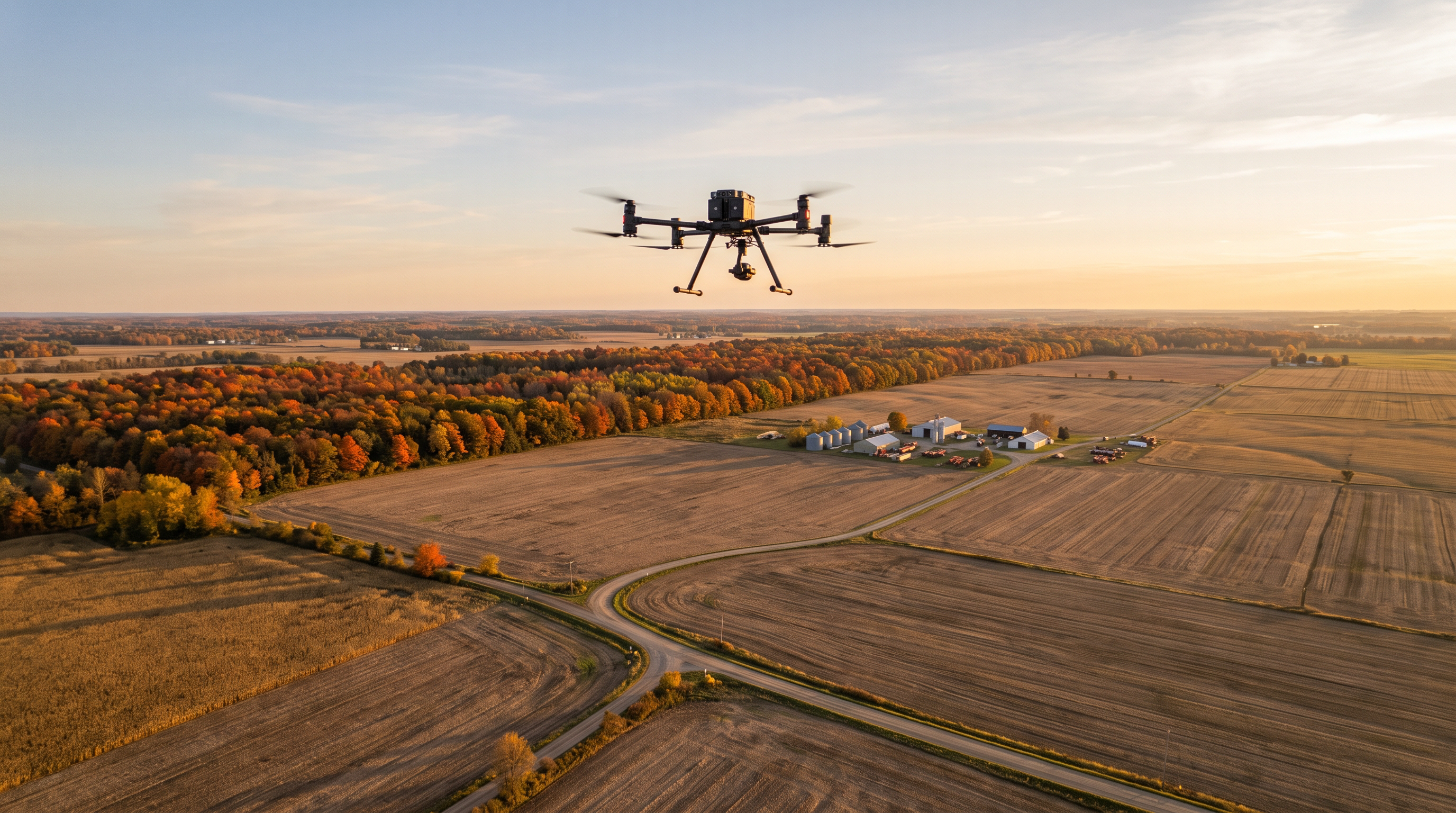
If you fly a drone for work in Canada, the rules you learned a few years ago are no longer the whole story. On November 4, 2025, Transport Canada brought in the biggest update to the drone regulations since 2019. The Transport Canada November 4 drone regulation changes opened up beyond visual line-of-sight flying, added a category for heavier drones, and created a new pilot certificate for more complex work. If you hold a Basic or Advanced certificate today, most of what you do still works the same way. But the ceiling on what you are allowed to do just got a lot higher.
Here is the short version. Before November 4, almost any operation beyond visual line-of-sight, or with a drone over 25 kg, meant applying for a Special Flight Operations Certificate (SFOC) and waiting weeks for approval. The Transport Canada November 4 drone regulation changes replace much of that paperwork with a standing set of rules you can operate under directly, as long as you meet the training and equipment requirements. For a lot of commercial operators, that is the difference between quoting a job and turning it down.
What the Transport Canada November 4 Drone Regulation Changes Actually Do
The update amends Part IX of the Canadian Aviation Regulations, the section that has governed remotely piloted aircraft systems (RPAS) since June 1, 2019. Three things stand out.
First, beyond visual line-of-sight (BVLOS) operations now have a defined, lower-risk pathway. You can fly BVLOS in uncontrolled airspace, below 400 feet above ground level, and away from people, without a one-off SFOC for every mission. That is a real shift for pipeline patrols, rail inspections, large farms, and search work.
Second, there is a new category for medium drones. The framework now reaches aircraft up to 150 kg, where the old rules effectively capped routine operations at 25 kg. Heavier lift means bigger sensors, longer endurance, and cargo tasks that used to need special approval.
Third, a new pilot certificate covers lower-risk complex operations. To fly BVLOS or operate a medium drone, you pass the matching exam and, in most cases, a flight review. As of the latest Transport Canada guidelines, the Basic and Advanced certificates for drones between 250 g and 25 kg stay exactly as they are for standard visual line-of-sight work. You can read the current requirements straight from the source on the Transport Canada drone safety pages.
Who the November 4 Rule Changes Affect Most
Not every pilot needs to act. If you fly a sub-250 g drone for real estate photos, or run an Advanced operation over a construction site within sight, the Transport Canada November 4 drone regulation changes probably do not force you to do anything new tomorrow. Your certificate, your registration, and your operating limits carry on.
The operators who gain the most are the ones who kept hitting the old ceiling. Energy and utility crews inspecting long transmission corridors. Agricultural operators covering thousands of acres. Public safety teams that need to see past a treeline or a building. For them, the new BVLOS pathway removes the biggest bottleneck, which was waiting on an SFOC for routine work. We support many of these teams with commercial drone services, and the most common question this year has been how quickly they can move to BVLOS legally.
Consider a utility crew inspecting a 40 km transmission line. Under the old rules, the visual line-of-sight limit meant leapfrogging launch points every few hundred metres, or applying for an SFOC and waiting weeks. A single BVLOS flight can now cover that corridor in one pass. That can turn a two-day job into an afternoon, which is exactly the kind of saving that pushed so many operators to ask about the new rules the moment they landed.
There is a flip side worth being honest about. The new privileges come with more responsibility. BVLOS work demands better planning, detect-and-avoid thinking, and solid procedures for losing the link to your aircraft. A medium drone that fails at altitude carries more energy, and more risk, than a 900 g quadcopter. Transport Canada expects your training and your safety case to match the operation.
What Stays the Same After the Changes
It is easy to assume a big update rewrites everything. It does not. Registration is still required for drones from 250 g up. You still keep your aircraft in sight for standard operations unless you are specifically qualified and equipped for BVLOS. You still stay clear of crewed aircraft, respect controlled airspace, and follow site rules. The Transport Canada November 4 drone regulation changes add options. They do not remove the basics that keep the airspace safe.
How to Prepare for the New Drone Regulations
Preparing for the Transport Canada November 4 drone regulation changes is mostly about matching your training to your ambitions. Start by being honest about what you fly and where you want to grow. Most operators fall into one of three buckets.
If your work stays within visual line-of-sight and under 25 kg, keep your Advanced certificate current and confirm your drone is registered. You are already compliant. If you are eyeing BVLOS or heavier aircraft, the practical next step is training for complex operations. Our team runs Transport Canada aligned instruction, and moving up through advanced RPAS certification is the cleanest route into the privileges the new rules open up.
Before you take on paid BVLOS or medium-drone work, run through a short readiness check:
- Confirm the exact certificate and exam you need for the operation you are planning.
- Verify your aircraft is registered and, where required, meets the technical standards for the category.
- Write your standard operating procedures down, including lost-link and emergency steps.
- Test your command-and-control link and plan for redundancy on longer flights.
- Keep maintenance and training records where an inspector can actually see them.
If a Transport Canada inspector asks how you manage risk, a binder beats a shrug every time. The operators who treat safety as paperwork they can produce on demand are the ones who keep their privileges.
A Quick Word on Timelines and Numbers
The main provisions took effect on November 4, 2025, and Transport Canada keeps refreshing its guidance material, exam content, and advisory circulars. As of the latest Transport Canada guidelines, treat any specific figure you read, whether altitude, weight, or distance, as something to confirm against the official pages before you build it into a client quote. When a detail matters for a paid job, verify it directly with Transport Canada rather than trusting a summary.
The Bottom Line for Commercial Pilots
The Transport Canada November 4 drone regulation changes are good news for serious operators. Work that used to need a slow, case-by-case SFOC now has a clear path. Heavier drones and BVLOS missions are within reach for pilots who put in the training and the procedures. The trade is simple. More capability, more accountability.
If you are not sure where your operation sits, or you want a second set of eyes on your compliance before the busy season, we are happy to help you map it out. You can book a free consultation and we will walk through your certificates, your aircraft, and the shortest legal route to the flying you want to do. The Transport Canada November 4 drone regulation changes reward the operators who prepare. The sooner you know your gaps, the sooner you can close them.
Ready to Take the Next Step?
Whether you need drone pilot certification, a custom engineered solution, help navigating Transport Canada permits, or a professional drone service for your next project, Mostavio-SkyTech is your trusted partner in Canada.
Contact us today for a free consultation and let’s build something great together.