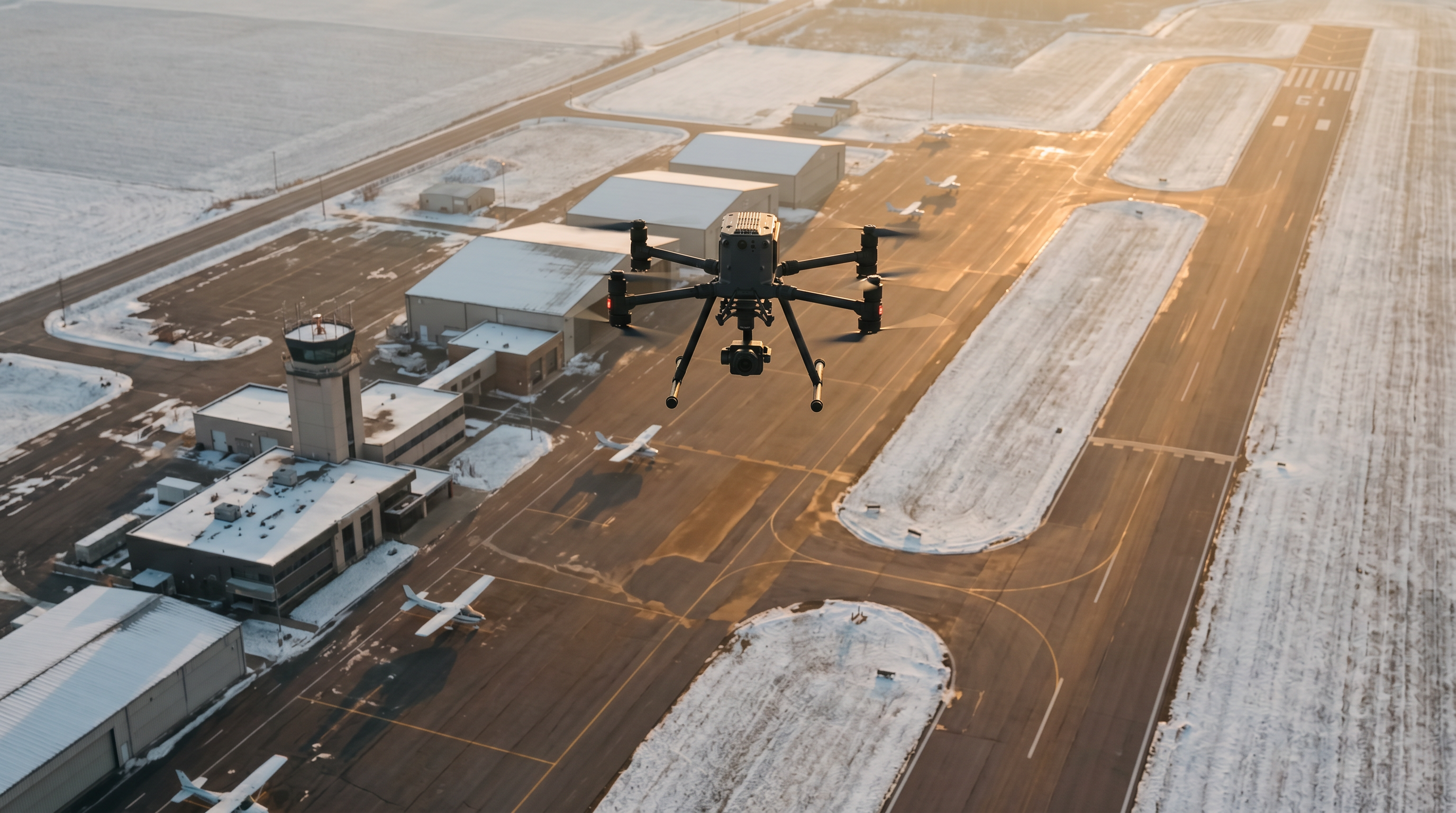
Yes, you can fly a drone near an airport in Canada, but only with the right certificate, a registered drone, and authorization from NAV CANADA. Most people get this wrong. They assume a hobby drone means hobby rules. The flying drone near airport canada rules are some of the strictest in the country, because airports sit inside controlled airspace where your aircraft shares the sky with crewed planes. Break them and you risk fines, a suspended certificate, or a real safety incident. This guide walks through what you need, in the order you need it.
The Short Answer for Flying Drone Near Airport Canada Rules
Here is the direct version. To fly legally in the controlled airspace that surrounds most Canadian airports, you need four things. An Advanced RPAS pilot certificate. A drone registered with Transport Canada. Authorization from NAV CANADA for that specific airspace. And a drone that meets the safety requirements for advanced operations.
Miss any one of those and you are not compliant. The flying drone near airport canada rules do not bend for weekend photographers or first-time operators. A 249 gram drone still counts once it affects air traffic near a runway. When in doubt, check the NAV Drone app before you launch.
Why Airports Change the Airspace Around You
Airspace in Canada is not one open field. NAV CANADA divides it into classes. Most of the country sits under uncontrolled airspace, called Class G, where basic drone operations are allowed if you stay clear of airports and people. Around airports, that changes. Controlled airspace, usually Class C, D, or E, wraps the airport like a layered dome. Air traffic controllers manage every aircraft inside it.
Your drone does not get a free pass into that dome. Basic operations must stay in uncontrolled airspace and away from airports and heliports. The moment your flight touches controlled airspace, you move into advanced operations, and the flying drone near airport canada rules apply in full. Companies that provide commercial drone services around airports treat this controlled airspace as a hard operating boundary and plan every flight around it. New pilots get caught here. They launch from a park that looks empty but sits under a controlled shelf they never checked.
Whatever Happened to the 5.6 km Rule?
Experienced pilots often remember a hard number. You could not fly within 5.6 kilometres of an airport or 1.9 kilometres of a heliport. That came from an older interim order. The current framework replaced those fixed rings with airspace-based rules. Now it is not about a set distance. It is about whether your flight enters controlled airspace and whether you hold authorization. In some rural areas you can fly closer to a small aerodrome than the old rule allowed. Near a major airport, controlled airspace can extend well past 5.6 kilometres. Distance alone never tells the whole story.
The Certificate You Actually Need
Transport Canada offers two pilot certificates. Basic and Advanced. For anything near an airport, you need the Advanced RPAS pilot certificate. The flying drone near airport canada rules treat that certificate as the baseline, not an upgrade.
Earning it takes two steps. First, pass the online Small Advanced Exam, which covers airspace, meteorology, and flight rules. Second, pass an in-person flight review with a Transport Canada RPAS flight reviewer. The flight review checks that you can operate the aircraft, read a chart, and handle a controlled airspace scenario. A basic certificate only needs the online exam, which is why it does not authorize airport-area flight.
You also need to register your drone if it weighs between 250 grams and 25 kilograms. Registration costs 5 dollars per aircraft, and the number must be marked on the airframe. If you plan to do this work professionally, earning your advanced RPAS certification is the credential that lets you operate in controlled airspace legally.
How NAV Drone Authorization Works
Once you hold an Advanced certificate, you still need permission for each controlled airspace flight. That permission comes from NAV CANADA, and the tool is the free NAV Drone app.
Open the app, drop your planned flight location, and it shows the airspace status. Some zones grant automatic authorization at low altitudes, similar to how the United States handles LAANC. Others require a manual request that NAV CANADA reviews. Near a busy airport like Toronto Pearson or Vancouver International, expect tighter ceilings and longer review times.
Do not treat authorization as a formality. It sets your maximum altitude, your area, and your time window. Fly outside those limits and you have broken your authorization, even if you followed every other part of the flying drone near airport canada rules. Screenshot your approval and keep it on you.
What the 2023 Rule Changes Mean for You
Transport Canada amended the RPAS framework with regulations registered in late 2023, and it has continued to phase in changes since. The direction is toward enabling more complex operations, including beyond visual line of sight flight and larger aircraft, with new categories added over time. As of the latest Transport Canada guidelines, the core requirement for airport-area flight has not loosened. You still need advanced certification and NAV CANADA authorization.
The practical takeaway is simple. Do not assume a rule you read two years ago still applies word for word. The framework moves. Before any flight that touches the flying drone near airport canada rules, confirm the current requirements at tc.canada.ca. That habit separates serious operators from the ones who get grounded.
Common Mistakes That Break Flying Drone Near Airport Canada Rules
Even certified pilots slip up. These errors show up most often.
- Launching from a park that sits under a controlled airspace shelf without checking NAV Drone first.
- Assuming a sub-250 gram drone is exempt everywhere. Weight lowers some requirements, but it does not erase airspace boundaries near airports.
- Letting authorization expire mid-shoot and continuing to fly.
- Ignoring heliports. Hospitals and office towers have them, and they carry their own restrictions.
- Climbing above 122 metres, which is 400 feet, when your authorization caps you lower.
Each of these breaks the flying drone near airport canada rules on its own. Controllers and airport staff do report drones, and Transport Canada does act on it. As of the latest Transport Canada guidelines, penalties can reach 3,000 dollars for an individual and 15,000 dollars for a corporation when a flight endangers aviation safety.
How the Rules Apply to Commercial Work
Plenty of real work happens near airports. Roof inspections, construction progress mapping, infrastructure surveys, and news coverage all put drones close to controlled airspace. The rules do not stop this work. They shape how you plan it.
Professional teams build airspace checks into their scope before they quote a job. They confirm the airspace class, request authorization early, and schedule flights around traffic windows. For complex sites near major airports, aviation consulting can save a project from a last-minute grounding. The cost of planning is always lower than the cost of a stalled shoot or a penalty.
Staying Legal Under Flying Drone Near Airport Canada Rules
None of this should scare you off. Drones do valuable work near airports every day, safely and within the law. The flying drone near airport canada rules exist to keep your aircraft and crewed aircraft apart, and they are learnable.
Start with the Advanced certificate. Register your drone. Check NAV Drone before every flight and hold your authorization. Watch tc.canada.ca as the framework evolves. Do those four things and you can operate near airports with confidence instead of guesswork.
If you want a partner who works inside these rules daily, our team can help you plan compliant flights, earn the right certification, and keep your operations clean. You can book a free consultation and we will map out exactly what your project needs.
Ready to Take the Next Step?
Whether you need drone pilot certification, a custom engineered solution, help navigating Transport Canada permits, or a professional drone service for your next project, Mostavio-SkyTech is your trusted partner in Canada.
Contact us today for a free consultation and let’s build something great together.