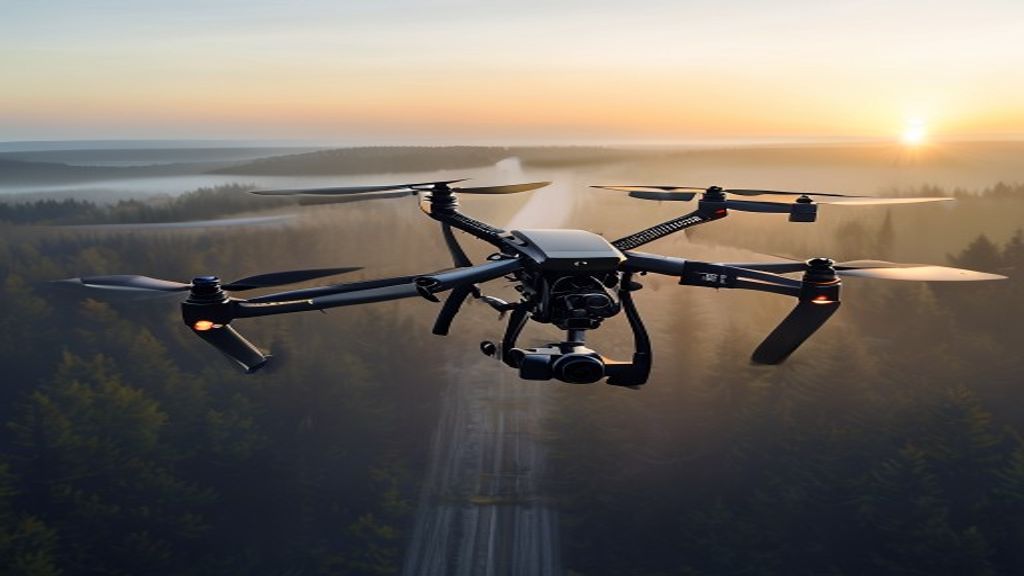
The DJI Matrice 400 is DJI’s newest flagship enterprise drone, and if you are sizing it up for real field work, three numbers tell most of the story: up to 59 minutes of flight time, 6 kg of payload capacity, and a 40 km transmission range. This guide to the dji matrice 400 specs and use cases is written for operators who need to make a buying decision, not read a brochure. We fly platforms like this on paid jobs, so we will be straight about where the aircraft earns its price and where it does not.
Here is the short version. The Matrice 400 is a heavy-lift inspection and mapping drone that takes over the top spot from the M350 RTK. If your work involves powerline corridors, large survey areas, night search and rescue, or carrying two sensors at once, the dji matrice 400 specs and use cases line up well. If you shoot short real estate videos or want something you can throw in a backpack, this is far more drone than you need. The sections below break down each headline spec and match it to the jobs it actually suits.
DJI Matrice 400 Specs and Use Cases: The Headline Numbers
Start with the figures that change how you plan a mission. These are the specs that decide whether the aircraft fits your workflow before you ever look at the price tag.
- Flight time: up to 59 minutes on a single charge, about four minutes more than the M350 RTK. Cold Canadian winters pull that number down, so plan for less.
- Payload capacity: up to 6 kg, more than double the M350 RTK’s 2.7 kg. That headroom lets you fly heavier sensors or run two payloads at once.
- Transmission: DJI O4 Enterprise Enhanced, rated up to 40 km with strong resistance to interference in busy radio environments.
- RTK positioning: centimeter-level accuracy, roughly 1 cm plus 1 ppm horizontal. That is survey grade, often without laying ground control points.
- Obstacle sensing: a new LiDAR ranging sensor paired with millimeter-wave radar for 360 degree awareness, including in total darkness.
- Build and rating: IP55 ingress protection, rated for operation from -20°C to 50°C.
- Wind resistance: around 12 m/s, enough for most working days but not a storm chaser.
Put together, the dji matrice 400 specs and use cases point at two words: endurance and lift. Four extra minutes per sortie sounds trivial, but across a full day it means fewer battery swaps and more billable data on the card. The jump to 6 kg of payload opens sensor combinations the M350 RTK simply could not carry. DJI publishes the full sheet on its DJI Enterprise site, and we recommend cross-checking payload compatibility there before you commit to an order.
Breaking Down the DJI Matrice 400 Specs and Use Cases by Job
Specs only matter in context. Here is how the dji matrice 400 specs and use cases translate into the work clients across Canada actually pay for, using the same platform class we deploy for our own commercial drone services.
DJI Matrice 400 Specs and Use Cases for Public Safety
Search and rescue and police teams care about two things: time in the air and seeing in the dark. The 59-minute endurance keeps the aircraft over a search grid longer between swaps, which matters when minutes decide the outcome. The new LiDAR obstacle sensing lets crews fly close to terrain, buildings, and wires at night without clipping something. Pair the airframe with the Zenmuse H30T and you get a thermal camera, a wide camera, and a long-range zoom on one gimbal, so a single operator can spot a heat signature and confirm it from a safe standoff.
Energy, Utilities and Pipeline Inspection
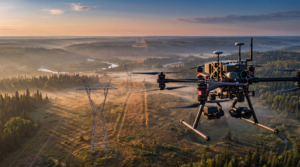
This is where the aircraft earns its keep. Powerline and pipeline corridors are long, linear, and dangerous to inspect by helicopter or on foot. With RTK precision and the H30T zoom, a single flight covers kilometers of line and returns imagery sharp enough to read a cracked insulator or a corroded fitting. The 6 kg payload also means you can carry a heavier gas-detection or multispectral sensor for specialized surveys without hitting the weight ceiling. For a utility that inspects hundreds of kilometers a year, the longer flights and quicker sensor swaps add up to real days saved each season.
Surveying, Mapping and Construction
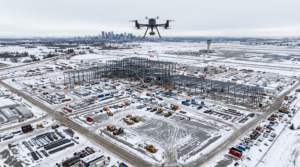
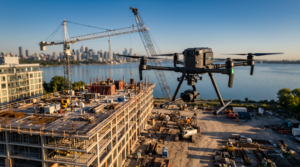
Mapping crews will like the payload headroom. The Matrice 400 carries the Zenmuse L2 LiDAR or the P1 full-frame photogrammetry camera, and with 6 kg to spend you can move up to heavier third-party sensors when a job demands it. The centimeter-level RTK cuts the number of ground control points you need to lay, which saves hours on every site. On a large construction earthworks survey, that accuracy is the difference between a usable volume calculation and a costly reflight the following week.
Where the DJI Matrice 400 Specs and Use Cases Fall Short
No drone is perfect, and an honest look at the dji matrice 400 specs and use cases has to cover the trade-offs. Here is what the spec sheet will not tell you.
- It is big and heavy. This is a two-hand aircraft that needs a proper transport case. For light or quick jobs, it is more machine than the task deserves.
- It is expensive. Flagship pricing applies, and the real cost is the full kit: airframe, payloads, spare batteries, and a charging case. For many buyers a Mavic 3 Enterprise or a smaller Matrice does the same job for a fraction of the money.
- The regulatory bar is higher. At well over the 250 g threshold, you must register the aircraft and hold the right pilot certificate under Transport Canada‘s RPAS rules. Advanced work such as flying beyond visual line of sight or near people needs extra certification.
- Winter cuts the numbers. The 59-minute figure is a best-case lab result. Ontario and Prairie winter flying shortens both flight time and battery lifespan.
- It is a new platform. Being new means the payload and firmware ecosystem is still maturing, and some third-party integrations will lag for a while.
Matching the DJI Matrice 400 Specs and Use Cases to Your Budget
So who should actually buy it? If you run an inspection, survey, or public safety program and you bill for the data, the dji matrice 400 specs and use cases justify the spend, because the endurance and payload directly cut your cost per flight. If drones are a side tool rather than a core part of your revenue, a lighter and cheaper platform is usually the smarter call. As an authorized DJI enterprise dealer, we can spec a full kit and walk you through current DJI enterprise drone products so you buy the right amount of drone, not the most expensive one.
One more practical note. Buying the aircraft is the easy part. Getting a crew certified, writing safe flight procedures, and securing the right operational approvals is where most programs stall. If you want a straight answer on whether this platform fits your operation, book a free consultation and we will map the aircraft to your real workload.
The bottom line on the dji matrice 400 specs and use cases is this: it is a serious tool built for serious work. The 59-minute flight time, 6 kg payload, 40 km link, and night-capable sensing make it one of the most capable enterprise drones you can buy today. Just weigh the dji matrice 400 specs and use cases against your real jobs, not the brochure, and make sure the aircraft matches the money you plan to earn with it.
Ready to Take the Next Step?
Whether you need drone pilot certification, a custom engineered solution, help navigating Transport Canada permits, or a professional drone service for your next project, Mostavio-SkyTech is your trusted partner in Canada.
Contact us today for a free consultation and let’s build something great together.