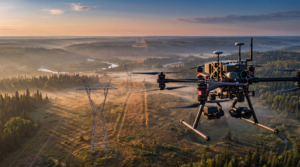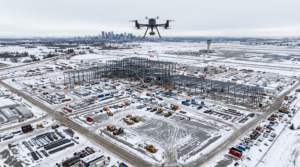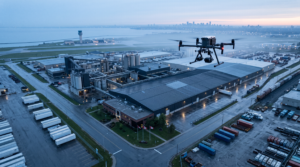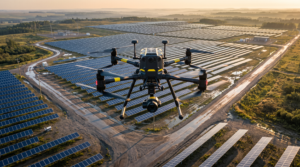
If you want to fly a drone to make money in Canada, here is the short answer. You almost always need a Transport Canada pilot certificate, your drone usually has to be registered, and any job that goes beyond simple line-of-sight flying needs extra approvals on top. What you need depends on three things. Where you fly. How much your drone weighs. And whether you can keep it in sight the entire time. Sorting that out before you shoot a single frame is real work, and it is exactly where a drone aviation consultant Canada businesses trust earns their fee.
Most owners and project managers do not want to become aviation-law experts. They want the roof inspected, the site mapped, or the footage delivered on time. This guide explains the main permits in plain English and shows where a drone aviation consultant Canada operators rely on saves you weeks of guesswork. If you would rather hand off the flying entirely, our commercial drone services cover the whole job from planning to final data.
What a Drone Aviation Consultant Actually Does for You
Think of a drone consultant as the person who translates between your project and Transport Canada. They read your job, work out which category it falls under, and tell you the exact certificates and approvals required. Then they help you get them. A good drone aviation consultant Canada companies hire will also review your flight plans, check the airspace, prepare the paperwork, and keep records that hold up if a regulator ever asks.
The value is not just knowing the rules. It is knowing which rules apply to your specific site and timeline. A wind-farm inspection in rural Alberta and a rooftop shoot in downtown Toronto follow very different paths. One might be a simple advanced operation. The other might need a special certificate and airspace coordination that takes weeks to arrange. A seasoned drone aviation consultant Canada firms depend on has seen both, and getting that call right at the start is the difference between flying on schedule and grounding a crew.
The Permits and Approvals, in Plain English
Canada sorts most commercial drone work, meaning drones between 250 grams and 25 kilograms, into two buckets: basic and advanced operations. Anything above or outside those buckets needs a special certificate. Here is how the pieces fit together.
Basic vs Advanced Operations
You need a Pilot Certificate for Basic Operations if you fly in uncontrolled airspace, stay clear of bystanders, and keep well away from airports. You need a Pilot Certificate for Advanced Operations if you fly in controlled airspace, near people, or close to an airport or heliport. Advanced also requires a drone with the right safety declaration from its manufacturer. Most paid work in cities lands in the advanced category. You earn these certificates through Transport Canada exams, and the advanced one adds an in-person flight review. You can check the current requirements on the Transport Canada drone safety pages, and it is worth confirming them before every new type of job because the rules keep evolving.
The SFOC: Your Key to Complex Work
A Special Flight Operations Certificate (SFOC) is what you need when a job falls outside the standard rules. Flying a drone heavier than 25 kilograms, operating at a special aviation event, or running certain higher-risk missions all trigger an SFOC. You apply to Transport Canada, describe exactly how you will manage the risk, and wait for approval. These applications take time and detail, and a weak one gets bounced. This is where a drone aviation consultant Canada teams lean on becomes worth every dollar, because a clean, complete SFOC application is a craft in itself.
BVLOS and Controlled Airspace
BVLOS means beyond visual line of sight, flying where you cannot see the drone with your own eyes. Think long pipeline surveys or wide agricultural mapping. As of the latest Transport Canada guidelines, Canada has been opening clearer paths for lower-risk BVLOS work, with newer certificate levels for complex operations, while higher-risk BVLOS still faces more scrutiny. Controlled airspace is the other common hurdle. If your site sits under an airport’s airspace, you need authorization before you fly. Advanced pilots often get this through NAV CANADA’s NAV Drone service, which clears many locations quickly and flags the ones that need manual coordination.
Flying at Night
Night flying is more accessible than most people expect. Under the standard rules you can fly at night as long as your drone has working position lights and you meet the operating conditions. Special or higher-risk night missions can still push you toward an SFOC, but a routine night inspection usually does not need a separate waiver. Knowing that difference keeps you from applying for approvals you do not actually need.
Do You Need a Drone Aviation Consultant, or Can You Do It Yourself?
If you fly the occasional basic operation in open countryside, you can likely manage the rules yourself after some study. The certification path is public, and Transport Canada’s site is fairly clear for straightforward work. If that is you, our drone aviation consulting team is happy to give you a quick sanity check and send you on your way.
The math changes fast when the job gets complex. Controlled airspace, BVLOS, drones over 25 kilograms, tight deadlines, or public-facing work in a busy area all raise the stakes. One rejected SFOC can cost you a month. One flight in the wrong airspace can cost you far more than that. In those cases a drone aviation consultant Canada contractors trust is not an expense, it is insurance. You are paying someone to get it right the first time so your project does not stall.
How a Drone Aviation Consultant Saves You Time and Money
The clearest benefit is speed. An experienced drone aviation consultant Canada operators keep on call already knows which application to file, what evidence Transport Canada wants, and how long each step takes. That turns a month of guesswork into a predictable timeline. The second benefit is avoided mistakes. Fines, grounded operations, and voided insurance all come from getting approvals wrong, and every one of those costs more than doing it properly up front.
There is a strategic payoff too. A drone aviation consultant Canada companies work with regularly can build you a repeatable operations manual, so your next ten jobs follow a proven template instead of starting from scratch. For a business that plans to fly often, that structure pays for itself quickly. It also makes you a safer, more credible operator in the eyes of clients and regulators.
Choosing a Partner You Can Rely On
Look for a team that flies, teaches, and consults, not just one of the three. A group that trains pilots understands the certification path from the inside. A group that runs its own operations knows where real projects hit snags. Ask any drone aviation consultant Canada clients recommend for references and a sample operations plan before you commit. When you are ready to map out your permits, you can book a free consultation and get a straight answer on exactly what your project needs.
The permits behind commercial drone work look intimidating from the outside, but they follow a clear logic once someone lays them out for you. That is the whole job of a drone aviation consultant Canada businesses trust: turn a wall of regulations into a short, plain checklist, then handle the parts you would rather not touch. Get that right, and the flying becomes the easy part.
Ready to Take the Next Step?
Whether you need drone pilot certification, a custom engineered solution, help navigating Transport Canada permits, or a professional drone service for your next project, Mostavio-SkyTech is your trusted partner in Canada.
Contact us today for a free consultation and let’s build something great together.