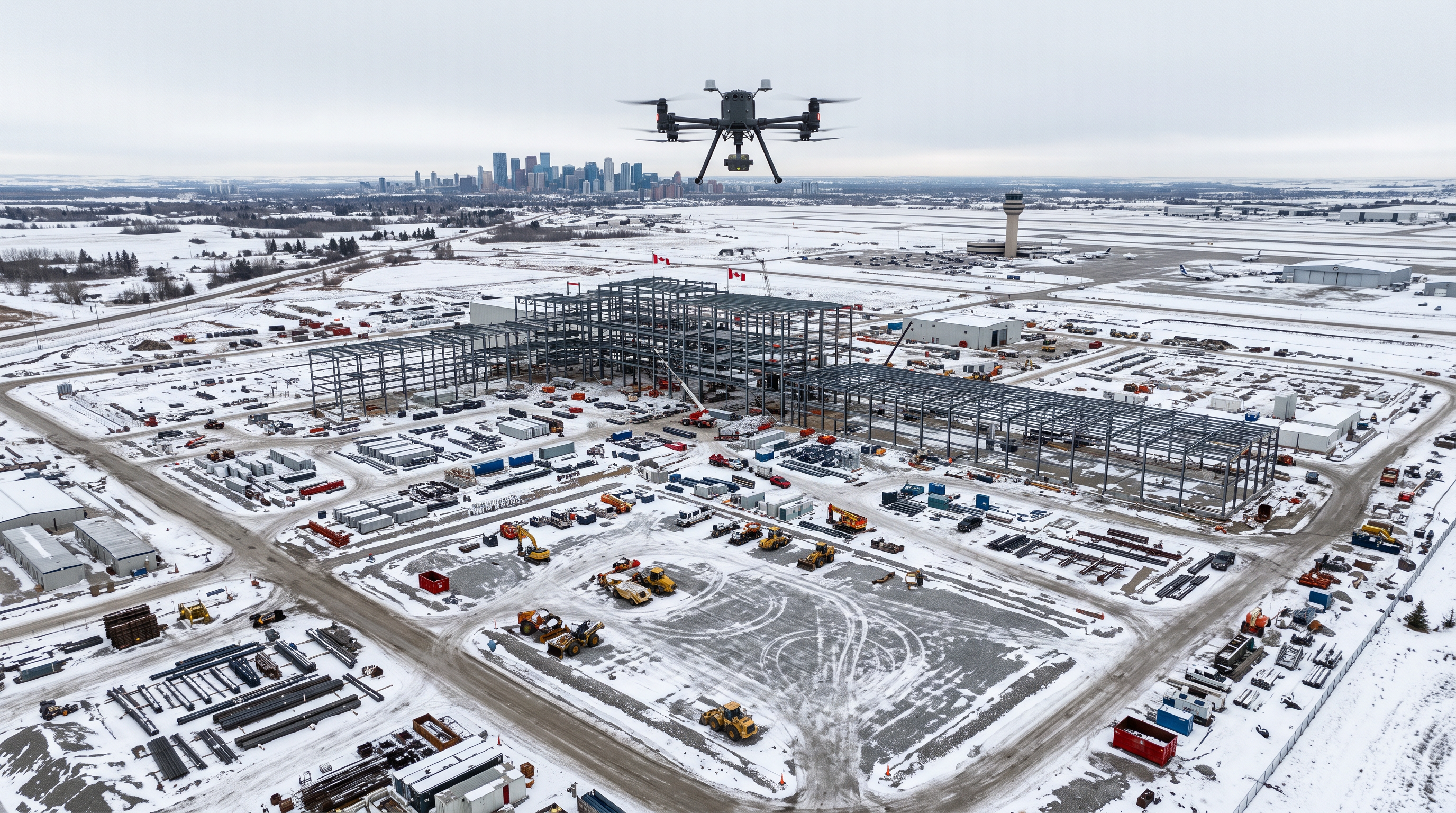
If you run a business and want to put a drone to work, the first thing you need is not a drone. It is the paperwork. Most owners and project managers come to us with the exact question they typed into Google: what permits do I need to fly drone commercially Canada? Here is the honest short answer. For most commercial jobs, you do not need a special permit at all. You need a Transport Canada pilot certificate, a registered aircraft, and the discipline to fly inside the standard rules. Special approvals only matter when your work steps outside those rules.
That surprises people. They expect a stack of government forms and a long wait. In reality, Transport Canada built a tiered system, and most commercial flying sits in the two lowest tiers. Below we break down every certificate and approval that exists, when each one applies, and how to tell which tier your project falls into. If you would rather skip the reading and hand the whole problem to a crew that already holds the certificates, that is what our commercial drone services are built for. Either way, the answer to what permits do I need to fly drone commercially Canada is shorter than the internet makes it sound.
The Short Answer to What Permits Do I Need to Fly Drone Commercially Canada
Canada does not issue a separate commercial drone permit. That is the first myth to drop. The rules in Part IX of the Canadian Aviation Regulations treat a flight the same whether you are paid for it or flying for fun. What matters is the weight of the aircraft and how close you fly to people and airspace, not the money. If your drone weighs between 250 grams and 25 kilograms and you keep it in sight, you need two things: a pilot certificate and a registered drone. That covers a large share of commercial work, from real estate photography to roof and solar inspections.
Only a few situations push you into permit territory: flying a drone heavier than 25 kilograms, flying beyond visual line of sight, or running an operation the standard rules do not already cover. Everything else is handled by your certificate. So when a client asks us what permits do I need to fly drone commercially Canada, our first job is to figure out which tier the work lands in before anyone fills out a single form. Get that step right and the rest is straightforward.
Your Pilot Certificate: Basic vs Advanced
Every commercial pilot needs one of two certificates from Transport Canada. The difference comes down to where you fly and how close you get to people.
Basic operations
A Basic certificate covers flights in uncontrolled airspace, more than 30 metres horizontally from bystanders, and never directly over people. You earn it by passing an online exam with a score of 65 percent or higher, and you must be at least 14 years old. There is no flight test. Most real estate, agriculture, and open-site inspection work fits inside Basic rules, which is why many businesses never need anything more than this.
Advanced operations
An Advanced certificate is the one most serious commercial operators want. It lets you fly in controlled airspace, close to people, and over bystanders, subject to your drone’s safety declaration. You pass a harder online exam at 80 percent, then complete an in-person flight review with a certified reviewer. The minimum age is 16. If your projects touch downtown cores, airports, or busy job sites, the Advanced certificate is what keeps you compliant. Most enterprise drones, including the DJI Mavic 3 Enterprise at roughly 920 grams and the Matrice 350 RTK at about 6.5 kilograms, sit inside the 250 gram to 25 kilogram band, so they need a certified pilot and registration before they ever leave the case.
When You Need an SFOC
The Special Flight Operations Certificate, or SFOC, is the big one people worry about. It is a case-by-case approval you apply for from Transport Canada, and this is where the question what permits do I need to fly drone commercially Canada gets more involved. You need an SFOC when your operation falls outside the standard rules. The common triggers are a drone over 25 kilograms, flights at a special aviation event, or an operation that combines several higher-risk factors at once. The application asks you to describe the operation, the site, your safety procedures, and your emergency plans. Transport Canada reviews it and either approves it, asks for changes, or declines. Turnaround can run several weeks, so applying early is not optional if you have a deadline.
Flying in Controlled Airspace
Controlled airspace sits around airports, heliports, and busy corridors. To fly there legally you need an Advanced certificate and a drone declared safe for that airspace, plus an authorization. In most of Canada you request that authorization through the NAV Drone app run by NAV CANADA, which either grants it automatically for lower ceilings or routes it to the local control tower for review. This is not an SFOC. It is a separate, faster clearance that Advanced pilots use every day. Skipping it is one of the most common and most expensive mistakes new commercial operators make.
BVLOS, Night, and Other Special Approvals
Beyond visual line of sight, or BVLOS, is where drones start to pay off for pipelines, rail lines, and large farms, because a single flight can cover many kilometres. It is also the approval most businesses ask us about. Traditionally, any BVLOS flight in Canada needed an SFOC. Transport Canada has begun opening lower-risk BVLOS through a newer certificate for qualifying operations, but most BVLOS work still runs through an SFOC or a specific authorization today. Night flying is easier than it used to be. Under the current rules you can fly commercially at night without a separate waiver, as long as your drone carries working position lights visible from a distance. These special cases are exactly where the answer to what permits do I need to fly drone commercially Canada shifts from a simple certificate to a tailored application.
The Paperwork Behind What Permits Do I Need to Fly Drone Commercially Canada
Registration is the piece owners forget. Every drone between 250 grams and 25 kilograms must be registered with Transport Canada before it flies, at a cost of five dollars per aircraft, and its registration number must be marked on the airframe. Insurance is not legally required for most operations, but almost every serious client, from construction firms to municipalities, will ask for proof of liability coverage before they let you on site, and one million to five million dollars is the range they expect. Keep your certificate, your registration, and your insurance certificate together, because that trio answers what permits do I need to fly drone commercially Canada for nine out of ten jobs.
How We Answer What Permits Do I Need to Fly Drone Commercially Canada for You
Here is where a partner saves you weeks. When a business calls us, we start by mapping the actual work to the rules: the drone, the site, the airspace, the people nearby, and the flight profile. From that we tell you exactly which certificate your pilots need, whether an SFOC or an airspace authorization applies, and what registration and insurance to line up. If the job needs an SFOC, our drone aviation consulting team writes and files the application for you and manages the back and forth with Transport Canada. If you would rather not build an in-house flight crew at all, we simply do the flying under our own certificates and hand you clean data. That is the value of asking what permits do I need to fly drone commercially Canada early: the answer decides whether you train, hire, or outsource.
The Bottom Line
So, what permits do I need to fly drone commercially Canada? For most work, no permit at all, just a Basic or Advanced pilot certificate and a registered drone. Step into controlled airspace and you add an airspace authorization. Fly beyond line of sight, go over 25 kilograms, or run an unusual operation, and you move up to an SFOC. The mistake we see most often is a business assuming the whole thing is harder than it is and stalling a profitable project for months, or worse, flying without the right certificate and risking fines that start in the thousands. Get the tier right at the start and the paperwork becomes routine. If you want a straight answer for your specific project, book a free consultation and we will map your permits in one call.
Ready to Take the Next Step?
Whether you need drone pilot certification, a custom engineered solution, help navigating Transport Canada permits, or a professional drone service for your next project, Mostavio-SkyTech is your trusted partner in Canada.
Contact us today for a free consultation and let’s build something great together.