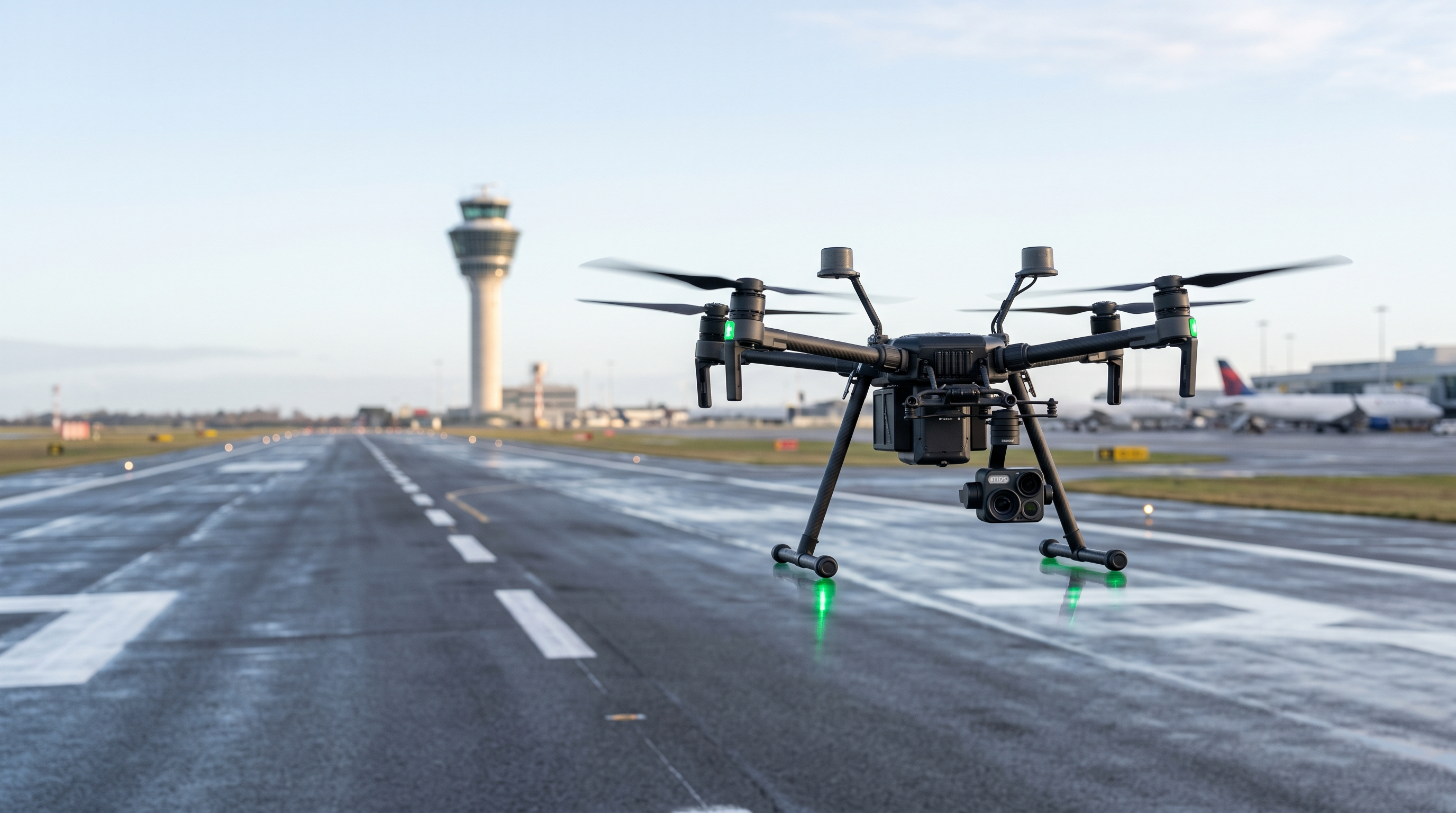
Here is the short answer. To fly a drone in controlled airspace in Canada, you need three things before you take off: a Pilot Certificate for Advanced Operations, a drone that carries the right manufacturer declaration, and a flight authorization from NAV CANADA. That is the core of controlled airspace drone permission Canada operators have to secure every time they fly near an airport or in busy managed airspace. Skip one step and the flight is illegal, even when nothing goes wrong.
The certificate is the easy part. The authorization is where pilots get stuck, often on the morning of a job. Plenty of businesses skip the learning curve and hire professional commercial drone services to handle the compliance side for them. This guide walks through each piece the way a working pilot deals with it, whether you fly it yourself or hire it out.
What Controlled Airspace Means Before You Fly
Canada’s airspace is split into controlled and uncontrolled zones. Controlled airspace is managed by air traffic control and usually surrounds airports, cities, and major flight paths. Around a large airport like Toronto Pearson, controlled airspace can start at the ground and stretch for kilometres. Uncontrolled airspace covers most rural areas, where you can fly under Basic Operations rules without calling anyone.
Why does this matter? A drone at 300 feet can share space with a helicopter, a medevac flight, or a small plane on final approach. Air traffic control needs to know you are there. That is the entire reason controlled airspace drone permission Canada rules exist. They are not paperwork for its own sake. They keep your drone and a crewed aircraft from meeting at the same altitude.
You can check whether your site sits in controlled airspace with the NAV Drone app or the drone site selection tool from NAV CANADA. Type in your location. The map shows the airspace class and the maximum altitude you can request. If it shows a ceiling of 0 feet, you are in a spot that needs a manual review instead of an instant approval.
How Controlled Airspace Drone Permission Canada Works
Controlled airspace drone permission Canada comes down to a sequence, not a single form. First, earn your Advanced certificate. You need it before you can legally request controlled airspace access. Second, confirm your drone is eligible. Third, file your authorization request with NAV CANADA and wait for the answer. The two steps that cause the most trouble are worth a closer look.
Getting Your Advanced Certificate
To operate in controlled airspace you need a Pilot Certificate for Advanced Operations, not the Basic one. The Advanced path has two steps. You pass the online Small Advanced Exam, which needs a score of at least 80 percent. Then you complete an in-person flight review with a qualified reviewer, where you show you can handle the aircraft and the airspace rules. Basic Operations does not cover controlled airspace at all, so there is no shortcut.
If you are building a team or earning your own ticket, structured advanced RPAS certification training shortens the road. Most people who fail the flight review fail on airspace questions, not stick skills. Learn the RPAS Flight Authorization process cold before you sit the review.
Confirming Your Drone Is Eligible
Your certificate is only half the equation. The drone itself needs a manufacturer’s declaration that lists operations in controlled airspace. Transport Canada keeps a public list of drones and what each one is declared for. Most enterprise models from major brands, including the DJI Matrice and Mavic 3 Enterprise series, carry the controlled airspace declaration. A hobby drone with no declaration cannot legally fly there, no matter how strong your certificate is.
Register the aircraft too. Every drone between 250 grams and 25 kilograms must be registered with Transport Canada, and the registration number has to be marked on the airframe. It costs 5 dollars and takes a few minutes.
Requesting Authorization Through NAV CANADA
This step surprises new pilots. Holding an Advanced certificate does not let you fly in controlled airspace on its own. You still need a specific authorization for that location, altitude, and time. NAV CANADA runs this through the RPAS Flight Authorization system inside the NAV Drone app.
Open the app, draw your operating area, set your altitude, and submit. In many low-risk zones the system returns an automatic approval in seconds. Closer to a runway, the request goes to a human reviewer and can take several business days. I have seen approvals come back in under a minute near the edge of a control zone, and I have waited a week for a site two kilometres from a major airport. Plan for the slow case.
One more practical note. Your authorization is not a blanket pass. It lists the exact coordinates, the altitude ceiling, and the window of dates and times you asked for. Fly outside any of those and you have voided it. Keep the approval on your phone during the flight. If air traffic control or a peace officer asks, you want to show it in seconds.
The honest truth about controlled airspace drone permission Canada is that timing is your biggest risk, not the rules themselves. If a client wants footage beside an airport on Friday, you request the authorization on Monday. Same-day permission near a busy tower rarely happens.
What the November 2023 Rule Changes Mean
Transport Canada updated the RPAS regulations in November 2023, and further updates are rolling out for beyond visual line of sight flights and larger drones. As of the latest Transport Canada guidelines, the three-part structure for controlled airspace drone permission Canada has not changed: certificate, eligible drone, and NAV CANADA authorization. What is expanding is the range of operations you can eventually apply for, such as flying beyond visual line of sight and operating heavier aircraft under new certificate levels.
Because the rules keep moving, verify the current requirements directly at Transport Canada before any job. Do not rely on a forum post from two years ago. This is one area where the official source is the only source worth trusting.
Common Mistakes That Delay Controlled Airspace Drone Permission Canada
After years of watching pilots work through this, the same errors keep showing up.
- Requesting too late. Authorization can take days near a busy airport. Filing the morning of the shoot is the top cause of a cancelled job.
- Using a drone with no declaration. A valid Advanced certificate does not fix a drone that was never declared for controlled airspace.
- Assuming approval means anywhere. Your authorization is tied to the exact area and altitude you filed. Move the operation and you need a new request.
- Ignoring the ceiling. The app may clear you to 100 feet when you planned for 300. Read the altitude limit before you promise a client a specific shot.
Getting controlled airspace drone permission Canada right is mostly about respecting the timeline and reading the fine print. The pilots who never have problems treat the authorization as the first task on a job, not the last.
When It Pays to Bring in a Team
For a single property shoot in a rural area, you can handle everything yourself. For repeat work near airports, across dense urban cores, or over multiple provinces, the coordination adds up fast. A partner with existing certificates, declared aircraft, and a record of clean authorizations earns its keep in that setting. The regulatory load stops being your problem and the flying gets done on schedule.
There is also the equipment question. A declared enterprise drone with the sensors a commercial job needs can run 10,000 dollars or more, and it sits idle between projects. Renting the capability through a certified operator often costs less than owning it for occasional controlled airspace work. Be honest about how often you will actually fly before you buy.
The Bottom Line for Pilots
Controlled airspace drone permission Canada is not complicated once you see it as three locks that all have to open: the right certificate, a declared drone, and a NAV CANADA authorization for your exact site and time. The rules are strict for good reason, and the biggest failures come from bad timing, not bad intentions. File early, read your altitude ceiling, and never assume one approval covers the next site. Do that, and flying near an airport becomes routine instead of stressful. If you would rather hand both the compliance and the flying to a certified crew, book a free consultation and we will map out the fastest legal path for your project.
Ready to Take the Next Step?
Whether you need drone pilot certification, a custom engineered solution, help navigating Transport Canada permits, or a professional drone service for your next project, Mostavio-SkyTech is your trusted partner in Canada. Contact us today for a free consultation and let’s build something great together.