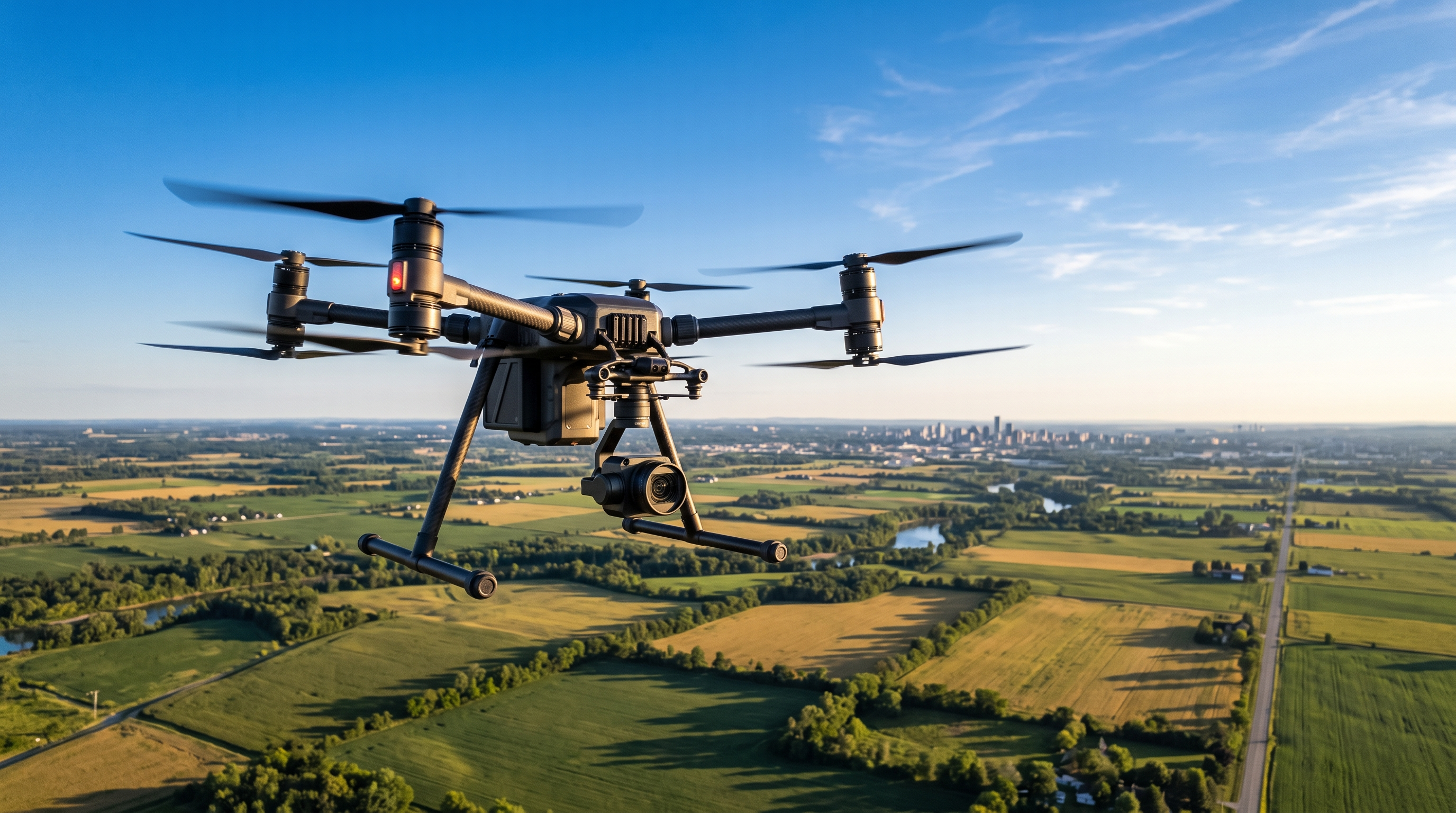
If you fly a drone anywhere in Ontario, the same federal rulebook applies whether you are shooting real estate photos in Mississauga or inspecting a transmission line near Sudbury. The drone rules Ontario 2025 pilots follow come from Transport Canada, not from the province or your city. In plain terms: if your drone weighs between 250 grams and 25 kilograms, you must register it, hold a valid pilot certificate, stay at or below 122 metres (400 feet), keep the aircraft in sight, and respect controlled airspace. Get those five things right and you are flying legally. Miss one and you risk a fine. Here is how each piece works.
What the Drone Rules Ontario 2025 Cover
The rules live in Part IX of the Canadian Aviation Regulations. They apply to almost every drone flown for any purpose. The same rulebook governs a weekend hobby flight and a company running commercial drone services, though businesses carry extra expectations we cover below. The weight of your aircraft decides how much paperwork you need.
Drones from 250 grams up to 25 kilograms fall under the standard registration and certification rules. This band covers nearly every popular model. A DJI Mini 4 Pro sits at 249 grams, just under the line, while a DJI Matrice 350 RTK weighs about 6.5 kilograms. Anything heavier than 25 kilograms needs a Special Flight Operations Certificate, which is a separate and slower approval process.
There is a common myth that a drone under 250 grams has no rules at all. That is false. Sub-250-gram aircraft skip registration and the pilot certificate, but you still cannot fly them near airports, over emergency scenes, or in any way that endangers a crewed aircraft or a person. The drone rules Ontario 2025 treat basic safety as non-negotiable at every weight.
Register Before You Fly
Every drone in the 250-gram to 25-kilogram range must be registered with Transport Canada before its first flight. Registration costs $5 per aircraft and is done online through the Drone Management Portal. Once registered, you receive a certificate and a registration number, and you must mark that number on the outside of the drone where it is easy to read. Flying an unregistered drone can cost an individual up to $1,000.
Basic and Advanced Pilot Certificates Explained
You need a pilot certificate to fly any drone from 250 grams to 25 kilograms. There are two levels, and the one you need depends on where you fly and how close you get to other people.
Basic operations
Basic covers the lower-risk end. You qualify for basic if you fly only in uncontrolled airspace, stay at least 30 metres (100 feet) horizontally from bystanders, and never fly directly over people who are not part of your crew. To earn the Pilot Certificate for Basic Operations you pass the Small Basic Exam. It has 35 questions and you need 65 percent to pass. The exam is online and open book, and you can retake it if you fail. The minimum age is 14, and you must carry your certificate, printed or digital, whenever you fly.
Advanced operations
Advanced is required the moment your flight involves controlled airspace, flying over bystanders, or operating within 30 metres of them. It asks more of you. You pass the Small Advanced Exam, which has 50 questions and a higher pass mark of 80 percent. Then you complete an in-person flight review with a Transport Canada RPAS flight reviewer, who confirms you can operate the aircraft safely. Your drone also needs a manufacturer safety declaration that covers the type of advanced operation you plan. The minimum age is 16. Most serious commercial work in Ontario runs at this level, which is why our team points professionals toward advanced RPAS certification from the start.
Airspace Is Where Most Ontario Pilots Get Caught
Ontario has some of the busiest airspace in Canada. Toronto Pearson, Billy Bishop, Ottawa International, and dozens of smaller aerodromes all sit inside controlled zones. If your flight touches controlled airspace, you need an Advanced certificate and an authorization before you take off. That authorization is not always instant, so plan ahead rather than assuming you will be cleared on the spot.
NAV CANADA runs the NAV Drone app, which handles automated airspace authorizations across much of the country. Before any job, check your location on NAV CANADA and confirm you are cleared to fly. The full Transport Canada rulebook and the registration portal both live at tc.canada.ca, which is the source to trust over any forum post. Two limits never change no matter your certificate level: stay at or below 122 metres (400 feet) above the ground, and keep the drone within your unaided line of sight at all times.
The Drone Rules Ontario 2025 for Commercial Operators
If you fly for money, the drone rules Ontario 2025 businesses follow are the same on paper but stricter in practice. A construction firm mapping a site, a utility inspecting towers, or an agency filming a property almost always operate under Advanced rules. That means Advanced-certified pilots, registered aircraft, airspace authorizations on file, and usually proof of liability insurance before a client will sign a contract.
This is the part that trips up companies new to the technology. The flying is the easy bit. The compliance paperwork, the insurance, and the record-keeping are where projects stall. That is why many Ontario businesses hand the whole operation to a certified provider instead of building an in-house program from scratch. If you would rather focus on the deliverable than the paperwork, a certified provider can cover the certification, the authorizations, and the flight itself in one package.
Penalties: What Breaking the Drone Rules Ontario 2025 Costs
Transport Canada backs the rules with real fines. As an individual, flying without a valid pilot certificate can cost up to $1,000, and flying an unregistered drone can cost the same. Putting an aircraft or a person in danger can run up to $3,000. For corporations those figures climb to $5,000 and $15,000. Inspectors do check, especially around airports and public events, so treating the drone rules Ontario 2025 as optional is an expensive gamble.
What Actually Changed for 2025
Transport Canada has been expanding the framework beyond simple within-sight flying. New provisions for lower-risk beyond-visual-line-of-sight (BVLOS) operations and for larger medium drones above 25 kilograms are phasing in, and they add higher certificate levels for those higher-risk flights. The exact requirements and the date each provision takes effect have shifted more than once, so as of the latest Transport Canada guidelines you should confirm the current status at tc.canada.ca before planning any BVLOS or heavy-lift work. For the vast majority of Ontario pilots flying standard drones within sight, the core rules described above are what apply right now.
Flying Legally Is the Simple Part
The drone rules Ontario 2025 reward pilots who prepare. Register the aircraft, pass the right exam, mark the drone, check the airspace, and stay inside the altitude and line-of-sight limits. Do that and you are compliant across the whole province and the rest of Canada. If the certification path or a specific job leaves you unsure, getting it right the first time beats risking a fine or a grounded project. Our team helps Ontario pilots and companies get certified and cleared to fly every week, and you can book a free consultation to map out exactly what your operation needs.
Ready to Take the Next Step?
Whether you need drone pilot certification, a custom engineered solution, help navigating Transport Canada permits, or a professional drone service for your next project, Mostavio-SkyTech is your trusted partner in Canada.
Contact us today for a free consultation and let’s build something great together.