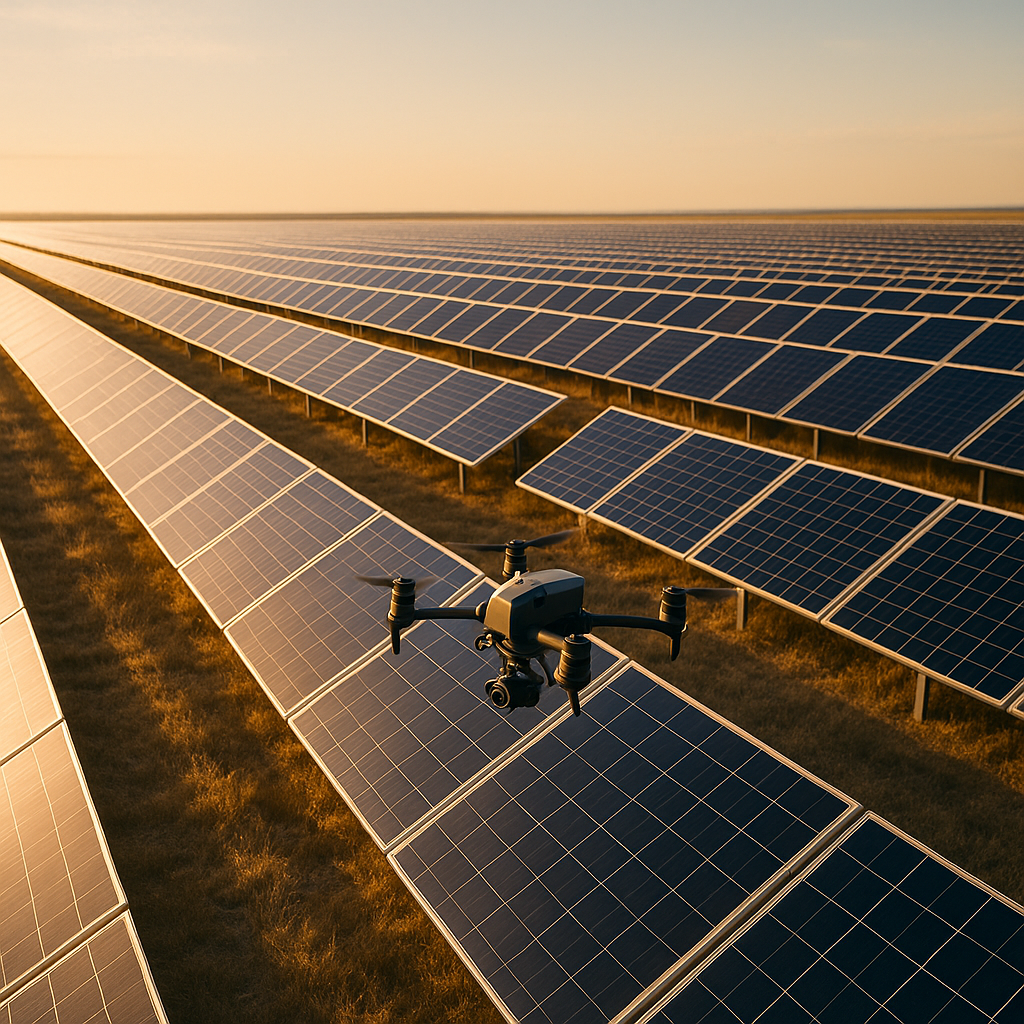
If you need a straight answer: for most teams, the best DJI drone for solar inspections is the Mavic 3 Thermal (M3T) for small-to-mid sites, the Matrice 30T (M30T) for mid-to-large sites and tougher conditions, and the Matrice 350 RTK with Zenmuse H20T for utility-scale portfolios where speed, redundancy, and highest uptime matter. The right choice depends on plant size, required throughput (MW/hour), wind and weather, data deliverables (radiometric vs. relative), and your budget. In other words, when you ask “dji drone for solar panel inspection which model,” your answer is tied to your operational reality—below we map it out clearly.
Quick answer: dji drone for solar panel inspection which model is best?
Here’s the practical field-tested breakdown we use with asset managers and EPCs across Canada:
- Best value for small to medium PV sites (under ~30 MW): DJI Mavic 3 Thermal (M3T). Portable, fast to deploy, radiometric 640×512 thermal, and optional RTK for precise repeats. Efficient for commercial rooftops and distributed ground-mounts.
- Best all-weather workhorse for 10–100 MW plants: DJI Matrice 30T (M30T). Integrated 640×512 thermal, IP55 weather rating, 41-minute endurance, and robust wind performance. Faster area coverage and better stability than sub-1 kg drones.
- Best for utility-scale portfolios and toughest conditions: DJI Matrice 350 RTK (M350 RTK) + Zenmuse H20T payload. 55-minute endurance, IP55, hot-swappable batteries, triple-payload compatibility, and enterprise redundancy. Ideal when you must maximize MW/hour and minimize downtime.
As an enterprise operator and DJI dealer, Mostavio-SkyTech runs these aircraft on real inspection jobs and offers full-stack commercial drone services when you need a turnkey team instead of buying new hardware.
How to choose a dji drone for solar panel inspection which model fits your site
Thermal PV inspection isn’t one-size-fits-all. Your decision hinges on:
- Plant size and MW/hour target: Larger arrays demand higher flight speed, endurance, and battery logistics.
- Data requirements: Radiometric thermography (R-JPEG/TIFF with temperature per pixel) vs. relative thermal for anomaly detection only.
- Environmental conditions: Wind, dust, and ambient temperatures call for higher ingress protection and propulsion headroom.
- Repeatability and geospatial control: RTK/PPK for precise flight line repeats, consistent view angles, and accurate pin drops for work orders.
- Downtime cost: Redundancy and reliability matter at scale; lost days at a 200 MW site are expensive.
Industry guidance (e.g., EPRI’s thermography recommendations) and DJI’s enterprise documentation (DJI Enterprise) both emphasize stable thermal sensors, proper irradiance (ideally >600 W/m²), low wind, and consistent altitude to produce credible results.
Budget-friendly pick: DJI drone for solar panel inspection which model under $10K?
Mavic 3 Thermal (M3T) is the entry-level enterprise thermal that punches above its weight:
- Thermal: 640×512 radiometric sensor with temperature measurement (R-JPEG), suitable for module and string-level hotspots.
- Visual: 48 MP wide with hybrid zoom for context and labeling anomalies.
- Flight time: Up to ~45 minutes per battery pair (real-world plan for 30–35 minutes loaded).
- RTK (optional): Centimetre-level positioning for repeatable flight lines and accurate geotagging.
Operational meaning: The M3T is excellent for rooftops, C&I sites, and smaller ground-mounts. Expect 1–3 MW/hour in consistent conditions with good flight planning. The absence of a mechanical shutter on the visible camera isn’t a deal-breaker for thermal surveys. Its light weight means quicker launch and less fatigue when you’re moving site to site.
Limitations: Less wind tolerance than bigger airframes; lower throughput on sprawling utility arrays; not IP55—so plan around dust and light rain. Still, if you’re asking “DJI drone for solar panel inspection which model is the best bang for buck,” the M3T is it.
Mid-size plants: DJI drone for solar panel inspection which model for 10–100 MW sites
Matrice 30T (M30T) is the sweet spot for many O&M teams:
- Thermal: Integrated 640×512 radiometric thermal.
- Visual payloads: Wide + zoom camera (up to 200× hybrid), making it easy to verify anomalies without landing.
- Endurance: Up to ~41 minutes; practical sector coverage is higher than M3T thanks to wind resistance and stability.
- Weather: IP55 for dust/rain; performs better in wind than sub-1 kg drones.
- RTK: Built-in for repeatable, accurate mission planning.
Operational meaning: Expect 3–6 MW/hour in open, consistent conditions with optimized flight lines. Setup is faster than a heavy-lift platform, and the integrated gimbal keeps things simple. If your question is “dji drone for solar panel inspection which model balances speed, portability, and reliability,” the M30T is our go-to field recommendation.
Utility scale: DJI drone for solar panel inspection which model for 100 MW+
Matrice 350 RTK (M350 RTK) + Zenmuse H20T is the enterprise flagship for big numbers:
- Thermal payload: Zenmuse H20T combines 640×512 radiometric thermal with a 20 MP wide camera, 12 MP zoom, and a laser rangefinder—ideal for pinpointing exact strings and module positions.
- Airframe: IP55, 55-minute flight time, hot-swappable batteries, triple-payload capacity, and robust wind performance.
- Navigation: RTK for centimetre-level repeatability; supports advanced mission planning and fleet operations.
Operational meaning: With optimized line spacing and altitude, crews can reliably hit 5–10+ MW/hour depending on layout density, terrain, and irradiance. Redundancy, battery ecosystem, and enterprise health monitoring minimize downtime. If you ask “dji drone for solar panel inspection which model when failure isn’t an option,” this is it.
Limitations: Higher upfront cost and a larger logistics footprint. Overkill for small sites, but unmatched for large portfolios where time is money.
Thermal payloads and settings: DJI drone for solar panel inspection which model considerations
Beyond the airframe, results live or die on payload configuration and field conditions:
- Radiometric vs. non-radiometric: Choose radiometric outputs (R-JPEG/TIFF) when you need temperature per pixel for reporting, trending, and warranty documentation. The M3T, M30T, and H20T all deliver radiometric data.
- Altitude and GSD: With 640×512 thermal, flying 60–100 m AGL yields practical GSD to detect cell- and module-level hotspots. Higher altitudes cover more ground but reduce anomaly definition. Always align with your acceptance criteria and client standard (e.g., IEC 62446-3 considerations).
- Environmental control: Follow best-practice windows: high irradiance (>600 W/m²), stable sky conditions, low wind, and minimal cloud flicker. This improves contrast and reduces false positives—aligned with EPRI guidance.
- Calibration and emissivity: Consistent emissivity assumptions and reflected apparent temperature matter for radiometric integrity. Keep notes for QA/QC.
In practice, our crews standardize flight lines, altitude, overlap, and image cadence for repeatability. If your team is still deciding “dji drone for solar panel inspection which model will meet our QA bar,” talk to us—we fly, teach, and audit to the same standard.
Operational throughput and ROI
Throughput is the backbone of ROI for solar inspections:
- Mavic 3T: ~1–3 MW/hour depending on layout and taxi time between blocks. Excellent for frequent, distributed inspections.
- Matrice 30T: ~3–6 MW/hour with better wind tolerance and faster ground ops.
- Matrice 350 RTK + H20T: ~5–10+ MW/hour with enterprise redundancy—ideal when mobilization costs and site scale dominate economics.
True ROI also includes how quickly you turn flights into a clear punch list. We pair thermal capture with analytics platforms or in-house processing to deliver structured defect lists (diodes, strings, hotspots, soiling, shading) and clear work orders your technicians can action the same day.
Workflow, software, and compliance for dji drone for solar panel inspection which model
Hardware is half the story. Your “dji drone for solar panel inspection which model” decision should harmonize with software and compliance:
- Mission planning: Use DJI Pilot 2 for consistent, repeatable flight lines with RTK. Establish templates per array type.
- Data management: Maintain a standardized folder structure and naming convention so your analytics pipeline (in-house or SaaS) is painless.
- Analytics: Choose platforms that support radiometric data and output defect classes compatible with your CMMS.
- Compliance in Canada: Ensure your pilots hold appropriate Transport Canada certification for the site’s airspace and operations, and that your ops manual covers thermal inspections, controlled airspace procedures, and safety protocols.
As an authorized DJI partner, we can align your aircraft choice with a software stack and documented SOPs. You can also evaluate current DJI enterprise documentation to see ecosystem compatibility and updates.
Pros and cons summary
- Mavic 3 Thermal (M3T)
- Pros: Lowest total cost, very portable, radiometric thermal, optional RTK, quick to deploy.
- Cons: Not IP55, lower wind tolerance and throughput vs. larger platforms.
- Best for: Rooftops, C&I portfolios, small ground-mounts, frequent spot checks.
- Matrice 30T (M30T)
- Pros: IP55, integrated payload, solid wind performance, strong MW/hour, RTK standard.
- Cons: Less endurance than M350; integrated payload limits future sensor swaps.
- Best for: 10–100 MW sites, variable weather, teams prioritizing speed and resilience.
- Matrice 350 RTK + H20T
- Pros: Highest endurance and resilience, hot-swappable batteries, flexible payloads, best throughput and redundancy.
- Cons: Higher cost, larger logistics footprint.
- Best for: 100 MW+ utility sites, strict uptime requirements, multi-sensor missions.
Where to buy and how SkyTech supports you
As a Toronto-based DJI Enterprise dealer and national operator, Mostavio-SkyTech helps you specify the right system, configure RTK and radios, and train your team on solar inspection workflows. Browse our DJI enterprise drone products to compare current kits, bundles, and payload options that map directly to your “dji drone for solar panel inspection which model” decision.
If you’d rather outsource a pilot project first, our field crews can execute a turnkey inspection and deliver a defect heat map and work-order list so you can quantify ROI before purchasing. When you’re ready to insource, we transfer the playbook and training.
Have a unique array layout, microinverter topology, or analytics requirement? Book a free consultation and we’ll align the airframe, payload, and data pipeline to your operational goals.
Field tips to maximize data quality
- Pick the right time window: Midday with strong irradiance and stable skies typically yields the best thermal contrast.
- Standardize altitude and overlap: Keep altitude consistent (e.g., 70–90 m AGL), and use enough overlap to ensure continuous module coverage without gaps.
- Manage battery logistics: Stage batteries and charging near sector boundaries; plan rotations so aircraft never wait on power.
- Document parameters: Emissivity, atmospheric conditions, and lens settings—your reports are only as good as your metadata.
- Validate anomalies visually: For critical calls, use the zoom camera to corroborate thermal signatures and reduce false positives.
Final verdict: DJI drone for solar panel inspection which model should you buy?
If you’re asking “DJI drone for solar panel inspection which model” for a small or distributed portfolio, choose the Mavic 3 Thermal—it’s the clear value leader. If you need a resilient, all-weather tool for 10–100 MW inspections at strong productivity, pick the Matrice 30T. For utility-scale operations where downtime is costly and throughput is king, go with the Matrice 350 RTK + Zenmuse H20T.
As a final note: whichever “dji drone for solar panel inspection which model” you select, the win comes from pairing the right aircraft with the right workflow. SkyTech can run the job for you, or stand up your in-house program with aircraft selection, SOPs, and hands-on training. Start with a pilot project, prove the ROI, and scale with confidence.
Ready to Take the Next Step?
Whether you need drone pilot certification, a custom engineered
solution, help navigating Transport Canada permits, or a professional
drone service for your next project — Mostavio-SkyTech is your
trusted partner in Canada.
Contact us today for a free consultation
and let’s build something great together.