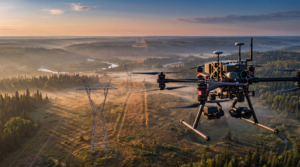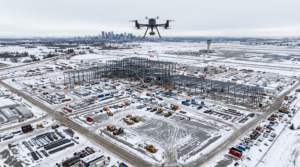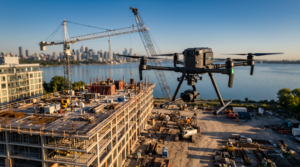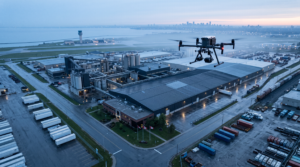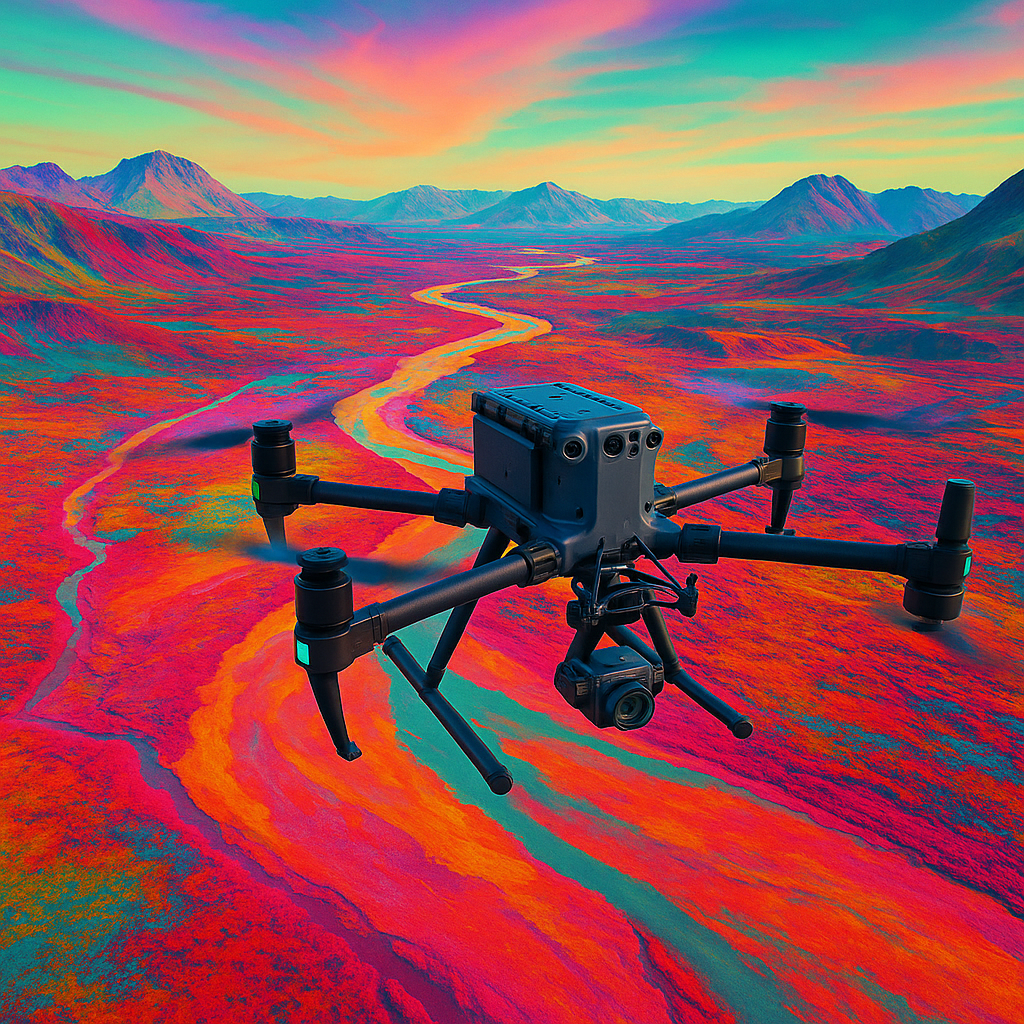
If you’re wondering how the DJI Matrice 350 RTK feels in day-to-day field work, here’s the short answer: it is the most confidence-inspiring, job-ready platform in DJI’s current enterprise lineup. The “dji matrice 350 rtk flying experience real world” is defined by strong link reliability, rock-solid hover, quick RTK lock, and smart battery logistics that keep teams productive. It is not the smallest or cheapest. But on real jobs—inspection, mapping, public safety—it shows up, flies steady, and brings home clean data with minimal fuss.
Who this platform is for—and what’s new over the M300
The Matrice 350 RTK builds on the M300’s proven airframe with meaningful updates that matter on sites across Canada. The aircraft offers up to 55 minutes of flight time with light payloads, an IP55 weather rating for light rain and dust, O3 Enterprise transmission for clearer links, an upgraded FPV camera for safer approaches, and enhanced arm-lock detection for preflight assurance. The TB65 batteries are hot-swappable and rated for extended life, which reduces battery costs and downtime over a season.
In practice, these upgrades translate to fewer aborted missions, faster turnarounds, and smoother pilot workflows. If your work demands longer lenses, LiDAR, or full-frame mapping sensors, this platform’s multi-gimbal support and top-mount options will handle it. And if you need a team to fly the mission for you—or to augment your crew during peak demand—Mostavio-SkyTech’s commercial drone services are available anywhere in Canada.
Real-world performance: dji matrice 350 rtk flying experience real world
The “dji matrice 350 rtk flying experience real world” starts with dependable setup. The airframe unfolds quickly, the gimbal locks are intuitive, and DJI Pilot 2 keeps the checklist tight. RTK lock is fast when you feed NTRIP corrections. In urban canyons or under light canopy, it still holds a stable solution better than most platforms we’ve tested in this class.
Once airborne, the aircraft feels glass-smooth—especially in hover and during slow, deliberate inspection moves. The link is stable and clear. We’ve flown around metal structures, over water, and near interfering sources where lesser aircraft struggle. O3 Enterprise keeps telemetry responsive and video crisp, which reduces pilot workload and improves shot quality.
Wind is where flight stability pays the bills. While you should always follow your SOPs, the Matrice 350 maintains framing and track lines in moderate winds that would push smaller RPAS around. It’s not a magic carpet in gusts, but you will get usable data with fewer refly passes. For line patrols, bridge decks, and rooftop envelope scans, that steadiness is worth real money.
RTK setup and accuracy in the field
With NTRIP configured, we typically see RTK fixed in under a minute, often much faster. In mapping workflows, pairing RTK with a few quality GCPs still produces the best outcomes. Expect horizontal accuracy in the low-centimetre range and vertical accuracy within a few centimetres when the mission is planned well and your control is solid. DJI’s RTK engine on this platform is mature, and it shows. For buyers comparing specs, DJI provides official details on the M350 RTK platform here: DJI Matrice 350 RTK overview.
Transmission, dual-operator handoff, and pilot ergonomics
For long linear assets or congested sites, dual-operator mode is smooth. The handoff is predictable, video remains stable, and the new RC has enough screen brightness to be usable on bright Ontario summer days. The upgraded FPV camera also helps with safer navigation during transitions, approaches, or tight landings.
Payloads and data quality: dji matrice 350 rtk flying experience real world
The “dji matrice 350 rtk flying experience real world” shines when you pair it with the right payload. This airframe supports the Zenmuse H20 series for inspection, the P1 for photogrammetry, and the L1 for LiDAR. You can also run top-mount configurations for special surveying or infrastructure tasks. The gimbal damping and platform stability translate into sharp imagery and clean point clouds.
Photogrammetry with the P1
The P1’s full-frame sensor and mechanical shutter produce crisp imagery with fewer motion artifacts at survey speeds. With well-planned overlaps and RTK corrections, you can hit tight tolerances for many engineering-grade deliverables. Run your dataset through a trusted engine such as Pix4Dmapper and you’ll see consistent, high-quality orthos and 3D meshes—even on mixed terrain. The stable platform means you can widen your corridor or area per flight while keeping ground sampling distance and blur in check.
LiDAR with the L1
The L1 makes the M350 a one-platform solution for complex terrain, tall canopy, and structures where photogrammetry alone struggles. The system captures dense point clouds with real-time colorization using the integrated camera. For vegetation penetration and vertical assets, we’ve found the data clean enough for fast turnarounds and detailed follow-up modeling, especially when the flight lines and altitude are tuned for the target density.
Inspection with H20/H20T/H20N
High-zoom optics, a laser rangefinder, and radiometric thermal options turn this drone into a reliable inspector for utilities, solar, and telecom. The gimbal holds framing while the aircraft resists drift, so you don’t end up chasing the subject. Thermal gradients are easier to read when the aircraft is rock steady and your image pipeline stays consistent across similar assets.
Safety systems and pilot confidence in Canada
The 6-directional sensing helps resist pilot error, though it should never replace proper training, a visual observer when required, and strong SOPs. The platform’s return-to-home logic and fail-safe behaviors are predictable and tested. For night operations, pair the drone with approved strobes and lighting, and ensure your pilots are certified and current for Advanced operations where applicable. If you need a turnkey team to execute critical missions under tight timelines, our commercial drone services can be deployed across Canada under strict safety management.
Reliability and maintenance: dji matrice 350 rtk flying experience real world
A big part of the “dji matrice 350 rtk flying experience real world” is how it holds up week after week. The TB65 batteries are the centerpiece of the system’s uptime. Hot-swaps and improved cycle life mean fewer sets to manage. The battery station keeps packs balanced and field-ready. In our operations, health logs and consistent charging practices have extended battery life and reduced mission delays.
Maintenance is straightforward: keep the aircraft clean, inspect arms and locks, check props, ensure firmware is current, and log every flight. The IP55 rating helps with light rain and dust, but always protect the gimbals and connectors when conditions turn rough. The CSM radar remains a smart add-on for teams working near vertical structures or in low-visibility situations.
Operational trade-offs and honest downsides
No platform is perfect. The Matrice 350 is larger and heavier than rapid-response drones. It needs more vehicle space and more time to stage. Batteries are an investment, and cold-weather performance demands strict thermal management to keep packs in the ideal range. If your work is mostly ad-hoc roof checks, small real estate, or very tight urban sites with short set-up windows, a Mavic 3 Enterprise or M30T may be more efficient.
But if your work involves repeatable, high-value missions where data quality and link stability are non-negotiable—powerline spans, structural steel, bridges, towers, or survey corridors—the M350’s weight class is a strength, not a weakness.
Where the M350 stands in the DJI enterprise lineup
- Mavic 3 Enterprise Series: fastest to deploy, great for small mapping and basic inspection. Limited by smaller sensor and less wind authority.
- M30/M30T: excellent rapid-response inspector. Integrated payload keeps kit compact. Less flexible than the M350 for heavy sensors or specialized mounting.
- M350 RTK: most flexible, most stable workhorse. Ideal for LiDAR, long focal lengths, multi-sensor missions, and top-mounted payloads.
From a buying perspective, the M350 is a long-term platform. You can add payloads as your program grows, and standardize on batteries and logistics that scale across teams. If you need help building the business case or selecting payloads, book a free consultation with our team.
Field workflows that save time
The “dji matrice 350 rtk flying experience real world” is also about workflow wins:
- Hot-swap batteries keep the aircraft on-station during inspection runs, avoiding re-rigging.
- Waypoints and corridor missions hold speed and overlap, improving mapping efficiency.
- Dual-operator mode reduces pilot fatigue when you need precise framing and safe navigation at the same time.
- Built-in health checks and arm-lock detection catch issues before takeoff.
Each of these reduces rework and risk, which matters on regulated, time-sensitive jobs.
What the numbers mean on real jobs
It’s easy to list specs. What matters is the translation to outcomes. With a high-zoom payload, you can hold stand-off distances while keeping level of detail high—safer and often faster than close approaches. With the P1 or L1, you cover more area per battery set while keeping accuracy and density inside your tolerances. With O3 Enterprise, you keep control links steady around steel and concrete. These are the reasons we keep this aircraft in our own fleet.
Buying with support from a Toronto-based enterprise team
Mostavio-SkyTech (skyt.ca) is an authorized enterprise dealer and a national operator. We match the airframe to your mission profile, set up RTK/NTRIP, build SOPs, and train your pilots to extract the most from the platform. We also help with payload selection, data workflows, and proof-of-concept flights before you invest further. Explore our current lineup of DJI enterprise drone products and talk to us about bundles that include training, spares, and long-term maintenance planning.
Bottom line: dji matrice 350 rtk flying experience real world
The “dji matrice 350 rtk flying experience real world” comes down to trust. It holds position in wind, links stay clean, RTK fixes quickly, batteries swap fast, and payloads deliver the data your clients pay for. If your operations demand consistent results on complex sites, the M350 RTK earns its keep. Review DJI’s official overview of the platform here: DJI Matrice 350 RTK, and test your mapping pipeline with proven software such as Pix4Dmapper to see the end-to-end efficiency in action.
As a Transport Canada certified team based in Toronto, we help organizations across Canada plan, deploy, and scale safe, compliant RPAS programs. If you want the benefits of the “dji matrice 350 rtk flying experience real world” without building the capability in-house, our commercial drone services are ready to support your next project.
FAQs we hear in the field
- How does the “dji matrice 350 rtk flying experience real world” compare to the M300? It’s broadly similar but with better weather sealing, transmission, FPV camera, arm-lock checks, and improved battery lifecycle.
- Is the M350 overkill for small sites? Sometimes. If your missions are short and simple, a smaller platform may be more efficient.
- What about data accuracy? With RTK, good mission planning, and proper control, expect survey-grade results suitable for many engineering workflows.
- How is service and parts availability in Canada? Strong. As an enterprise dealer, we stock critical items and support fast turnarounds.
Ready to Take the Next Step?
Whether you need drone pilot certification, a custom engineered
solution, help navigating Transport Canada permits, or a professional
drone service for your next project — Mostavio-SkyTech is your
trusted partner in Canada.
Contact us today for a free consultation
and let’s build something great together.