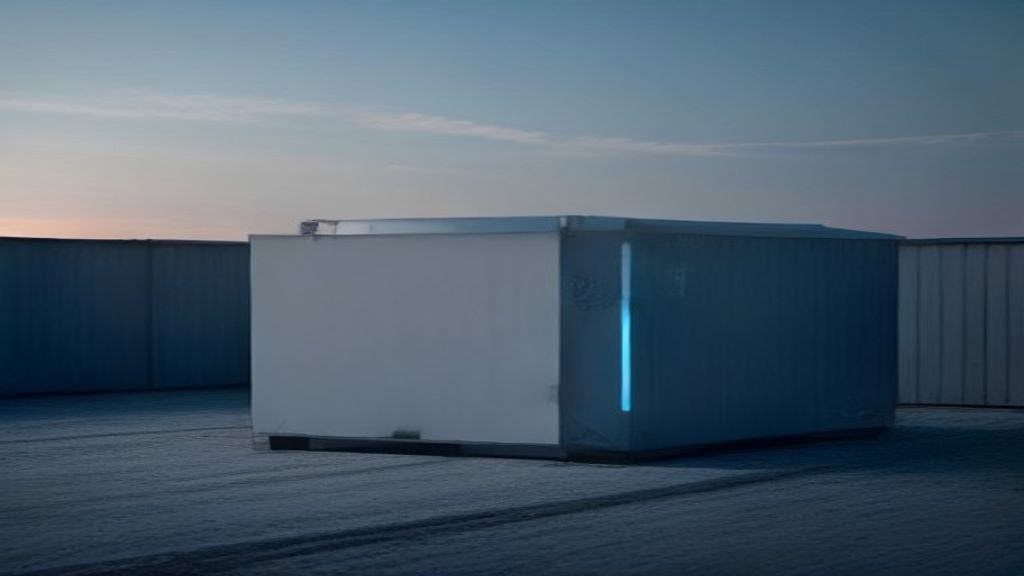
The DJI Dock 2 automated drone station Canada operators keep asking us about is a compact drone-in-a-box that flies scheduled missions on its own, lands, recharges, and uploads its data without a pilot on site. If you run the same inspection, security patrol, or site scan over and over, it can replace a lot of drive time and manual flights. This guide walks through what the hardware really does, the specs that matter, where it struggles in Canadian conditions, and who should actually buy one.
Here is the honest short version. The Dock 2 is the most practical drone-in-a-box DJI has shipped for small and mid-sized teams. It is about one sixth the size of the first Dock, two people can install it in an afternoon, and it costs far less to run. It is not a do-everything system. The drone and its sensors are fixed, so you trade flexibility for a lower price and simple setup. For the right job, that trade pays off fast.
What the DJI Dock 2 automated drone station is
A drone-in-a-box is exactly what it sounds like. A weatherproof enclosure holds a drone, charges it, protects it between flights, and lets you launch missions remotely through DJI FlightHub 2. You set a flight route once. After that the system flies it on a schedule, day or night, and pushes the photos, video, or thermal data to the cloud. Nobody has to stand in a field with a controller.
The Dock 2 pairs with two aircraft: the DJI Matrice 3D for mapping and the Matrice 3TD for inspection work that needs thermal. Both are built on the Mavic 3 Enterprise airframe, so they are small, quiet, and quick to charge. This is where a DJI Dock 2 automated drone station Canada business can start automating flights without hiring a full flight crew for every mission. If you already run commercial drone services, a dock turns your one-off flights into a standing, repeatable asset.
Specs that actually matter
Spec sheets list dozens of numbers. These are the ones that change how you plan a job:
- Flight time: up to 50 minutes per sortie on the Matrice 3D and 3TD. In real cold-weather flying, plan for less.
- Operating radius: up to 10 km from the dock. Keep a healthy return-to-home margin, so treat the practical working radius as smaller.
- RTK accuracy: centimeter-level positioning. For most mapping you can skip laying ground control points, which saves hours per site.
- Charging: roughly 20 percent to 90 percent in about 30 minutes. During that window the dock has no aircraft in the air.
- Weather station: the dock reads wind, rain, and temperature and will hold a launch if conditions break your limits.
- Backup battery: keeps the dock alive for about 5 hours through a power cut, so a short outage does not strand your drone.
- Environment: rated for -25°C to 45°C, with an IP55 dock body. That -25°C floor matters a lot in Canada.
The weather station and backup battery are not filler. On real deployments they are the difference between a system you trust unattended and one you keep babysitting. A DJI Dock 2 automated drone station Canada crews leave on a remote site has to make its own go or no-go call, and this one mostly does.
The drone: Matrice 3D and 3TD
The Matrice 3D carries a 20 MP wide camera with a mechanical shutter, which is what you want for clean orthomosaics and volume measurements. It also has a tele camera for spotting detail at distance. The Matrice 3TD swaps in a 640×512 radiometric thermal sensor alongside the visual cameras, which suits electrical, roofing, and search work. The catch is that the payload is fixed. You cannot bolt on a different sensor the way you can with a larger platform. Even so, for scheduled work the DJI Dock 2 automated drone station Canada buyers choose for these cameras covers most inspection and mapping jobs.
Where the DJI Dock 2 automated drone station earns its keep in Canada
The dock shines when the mission repeats. A DJI Dock 2 automated drone station Canada operators install on a fixed site pays for itself through frequency, not through any single flight. The clearest wins we see:
- Construction progress: a daily or weekly flight over a site gives project managers current maps and volumes without booking a pilot each time.
- Energy and utilities: substations, solar farms, and pipeline right-of-ways get scheduled visual and thermal sweeps that catch hot spots early.
- Public safety: a dock at a detachment or fire hall can put eyes on a scene minutes after a call, well before a crew arrives.
- Mining and aggregates: stockpile volumes and pit progress, measured on a schedule instead of once a quarter.
The Dock 2 sits inside DJI’s wider enterprise range, so if your needs grow you can step up to heavier platforms later. It is worth comparing the full lineup of DJI enterprise drone products before you commit. For a first automated site, though, the Dock 2 is usually the right size of bet.
The honest cons
No system is all upside. A DJI Dock 2 automated drone station Canada winters will test has a few real limits worth knowing before you buy:
- Cold cuts your numbers. The -25°C rating is a hard floor, not a comfort zone. Below freezing your battery gives less flight time, and in a deep cold snap the system will refuse to launch. Snow and ice on the lid can also block the clamshell.
- Connectivity is on you. The dock needs a solid 4G or Ethernet link. Plenty of Canadian inspection sites sit in cellular dead zones, so you may need to add Starlink or a dedicated link to keep it online.
- One drone, one dock. While the aircraft charges, you have no coverage. For a continuous watch you need more than one dock.
- Fixed payload. You are locked to the Matrice 3D or 3TD cameras. If a job needs a heavy zoom lens or a specialized sensor, this is not the platform for it.
Regulations you cannot skip
Here is the part that trips up most buyers. A dock flies beyond visual line of sight by design, and BVLOS approval is the real bottleneck, not the hardware. In Canada you cannot just set one up and press go. You have to meet Transport Canada’s requirements for the operation, which for automated dock flights means the right pilot certification and an approved operational authority. Read the current rules straight from Transport Canada before you plan a deployment, because the framework for lower-level BVLOS has been changing.
Plan this early. A DJI Dock 2 automated drone station Canada regulators will sign off on starts with the paperwork, not the install. Budget time to get your certification and operational approval in place. It is very doable, and it is where a lot of the value of working with an experienced dealer shows up.
Who should buy the DJI Dock 2 automated drone station
Buy it if you have a fixed site and a mission that repeats. The math is simple. Count how many pilot visits the dock removes in a year, add the drive time and mobilization you stop paying for, then compare that to the system cost. For a busy construction site or a utility yard, the payback is often measured in months. Confirm the latest specs on DJI’s own enterprise page, then talk to a dealer who has actually flown one.
Skip it, for now, if your work is scattered across many one-time sites, if you need a sensor the Matrice 3D and 3TD do not carry, or if you have no path to BVLOS approval yet. In those cases a crewed drone or a larger platform is the smarter first buy.
SkyTech is an authorized DJI enterprise dealer, and we do more than ship the box. We help you scope the site, choose between the 3D and 3TD, sort the Transport Canada approvals, and train your team to run it. If you want a straight answer on whether the DJI Dock 2 automated drone station Canada teams are adopting fits your operation, book a free consultation and we will walk through the numbers with you.
The Dock 2 will not replace every drone in your fleet. What it does well is turn a repeating flight into a reliable, mostly hands-off service. For the right site, a DJI Dock 2 automated drone station Canada operators can count on is one of the easiest wins in commercial drone work today.
Ready to Take the Next Step?
Whether you need drone pilot certification, a custom engineered solution, help navigating Transport Canada permits, or a professional drone service for your next project, Mostavio-SkyTech is your trusted partner in Canada.
Contact us today for a free consultation and let’s build something great together.